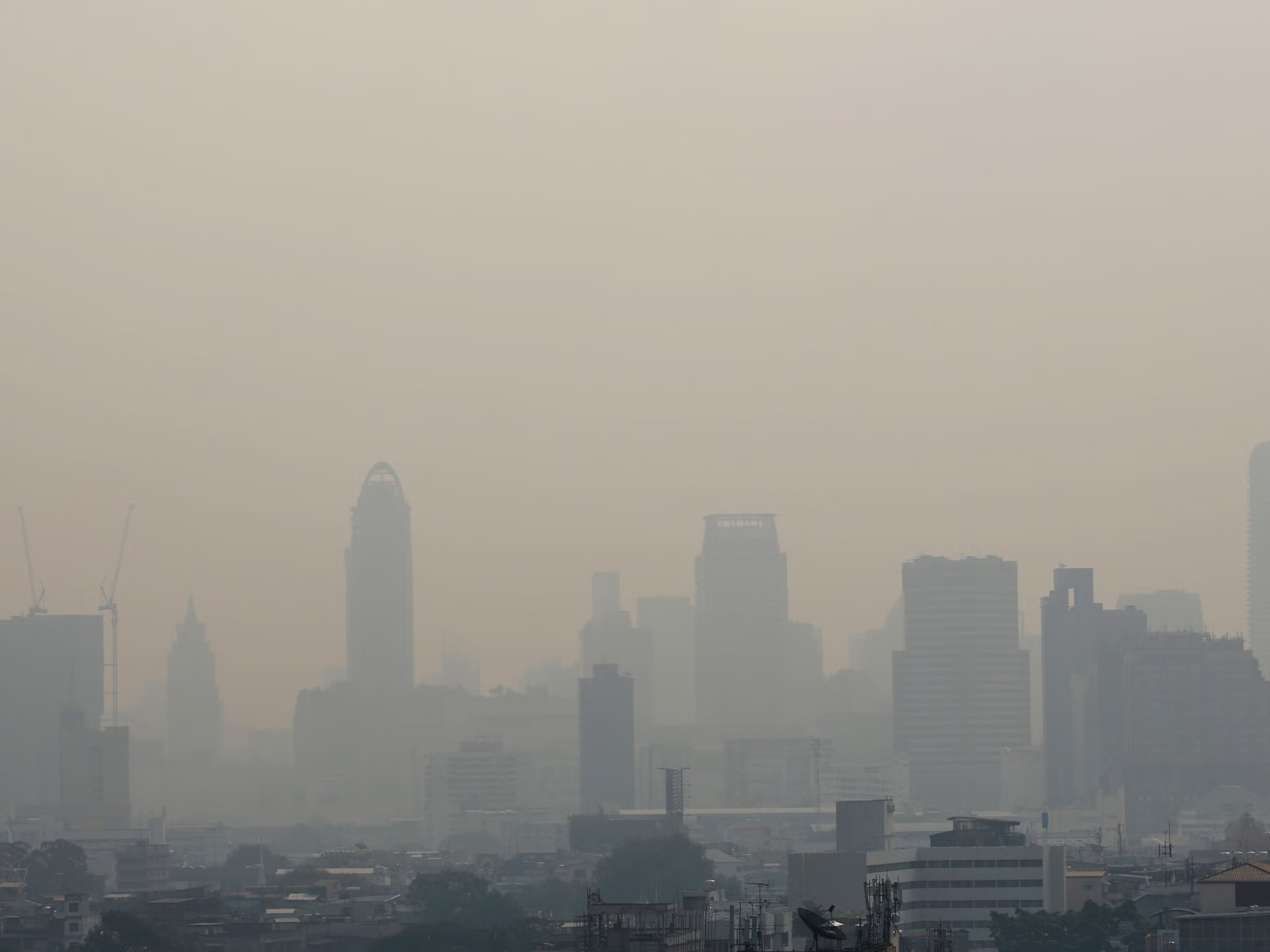









Bangkok residents are facing another period of elevated air pollution as fine particulate matter, or PM2.5, remains above recommended levels in several parts of the capital, prompting renewed health warnings and accelerating plans for stricter vehicle controls during smog episodes.
Air quality readings taken over the weekend showed PM2.5 concentrations high enough to pose risks for sensitive groups, including children, older adults, and people with heart or respiratory conditions. Officials advised residents to limit prolonged outdoor activity when pollution spikes and to monitor district-level readings, noting that conditions can vary significantly across the city.
PM2.5 refers to microscopic particles small enough to penetrate deep into the lungs and enter the bloodstream. Prolonged exposure has been linked to breathing difficulties, aggravated asthma, and cardiovascular problems. Even among otherwise healthy adults, higher pollution levels can cause throat irritation, coughing, and eye discomfort.
As Bangkok continues to experience recurring smog episodes, city authorities are preparing to expand the use of low-emission zones as a response tool during periods of poor air quality. The Bangkok Metropolitan Administration has been reviewing a proposal to widen restrictions on six-wheeled and larger vehicles across up to 50 districts when PM2.5 levels rise beyond set thresholds.
The proposed expansion builds on existing low-emission measures that have already been applied in limited areas of the city, particularly along major transport corridors. Under previous restrictions, officials reported reductions in heavy-truck traffic entering controlled zones during high-pollution periods. The broader plan would extend that approach across a much larger portion of Bangkok.
City officials have described the low-emission zone strategy as a targeted response rather than a permanent traffic ban. Restrictions would be activated only during smog episodes, with the aim of cutting emissions from heavy diesel vehicles that contribute significantly to particulate pollution.
The move comes amid growing public concern over Bangkok’s air quality, especially during cooler months when calmer winds can trap pollutants closer to the ground. When those conditions overlap with vehicle emissions, construction dust, and regional haze, PM2.5 levels can rise quickly and remain elevated for days.
While environmental advocates have welcomed stronger action on vehicle emissions, they caution that truck restrictions alone will not solve Bangkok’s pollution problem. Construction dust control, cleaner public transport fleets, and coordination with surrounding provinces on pollution sources are also widely seen as necessary for lasting improvement.
For businesses and logistics operators, the proposed expansion raises practical questions. Transport companies are seeking clarity on how quickly restrictions could be triggered, what exemptions might apply for essential services, and how enforcement would work in practice. City authorities have said detailed guidance would be issued before any wider rollout.
For residents, the immediate concern remains day-to-day exposure. Health officials continue to recommend wearing protective masks during high-pollution periods, avoiding strenuous outdoor exercise, and seeking medical advice if symptoms worsen. Many Bangkok residents have increasingly adjusted daily routines around pollution alerts rather than treating smog as an occasional event.
Authorities have not announced work-from-home measures or school closures in connection with the current pollution levels, but officials said air quality will continue to be closely monitored. Residents are encouraged to follow official updates and check local readings, especially in areas near heavy traffic and construction sites.
As Bangkok balances short-term mitigation with longer-term planning, the combined message from officials is one of caution and preparation: PM2.5 pollution is likely to remain a recurring challenge, and stricter transport controls are increasingly being positioned as part of the city’s response when smog returns.