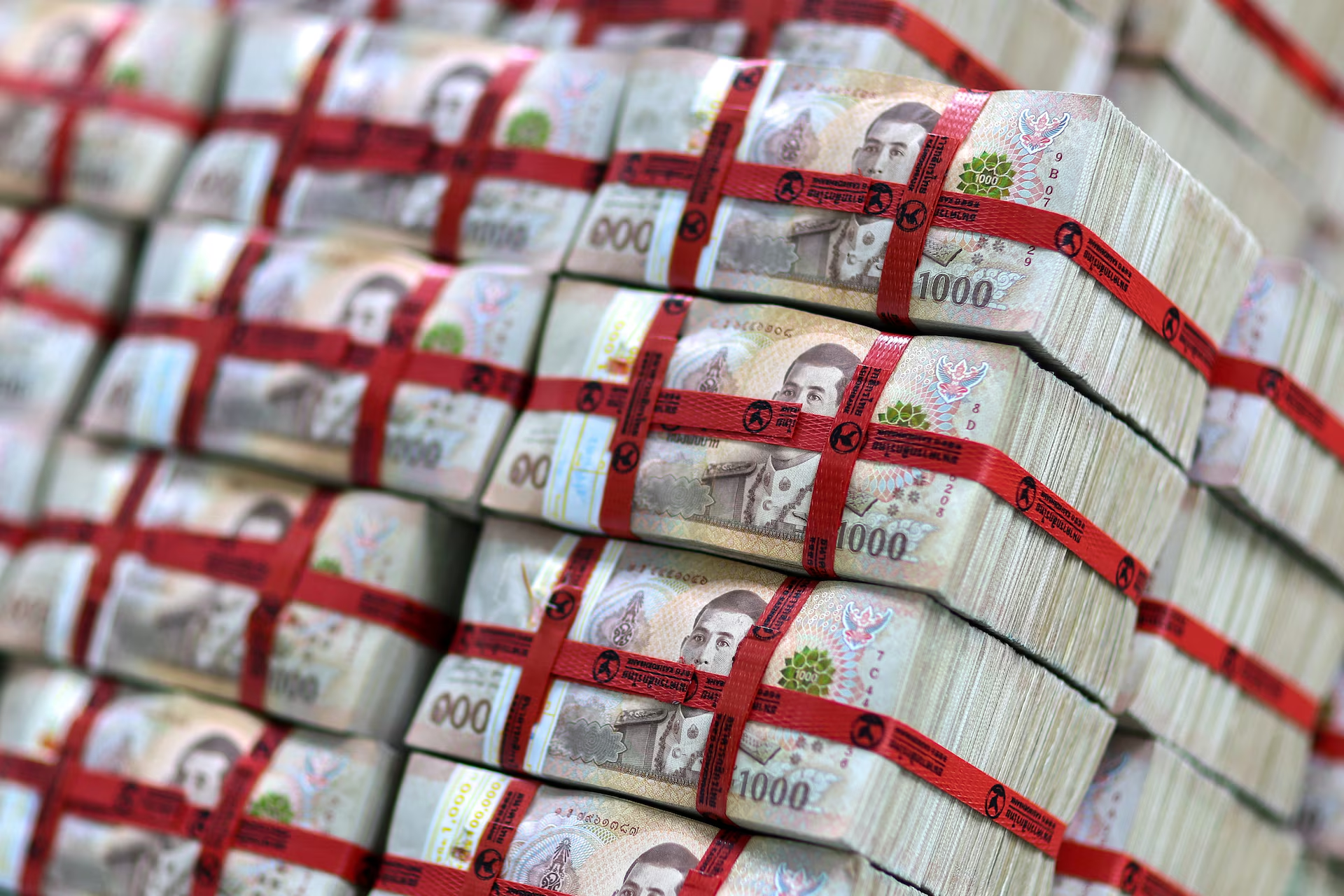









Thailand’s Cabinet has approved a 176-billion-baht cost-of-living relief scheme that will deliver financial support to more than 43 million people beginning June 1, as the government warns the country is entering a dangerous new phase of inflation driven by rising global energy prices.
Deputy Prime Minister and Finance Minister Ekniti Nitithanprapas announced the package — officially named “Thai Chuai Thai Plus” — at a press conference on Tuesday following the weekly Cabinet meeting. Registration opens May 25 through the Paotang mobile application, with benefits running from June through the end of September at participating retailers nationwide.
The program is divided into two main components. The first allocates 56 billion baht to 13.2 million state welfare cardholders, boosting their monthly government support from 300 baht to 1,000 baht for four months. Those currently holding welfare cards will receive the increase automatically, while the Interior Ministry has been instructed to update its database to bring in anyone who may have been missed.
The second component is a 120-billion-baht co-payment scheme targeting up to 30 million middle-class and salaried workers. Under the arrangement, the government covers 60% of the cost of everyday goods, up to 1,000 baht per person per month, while the individual pays the remaining 40%. Spending is capped at 200 baht per day and must be used within the same month. Service businesses — including hair salons, massage shops, and spas — have been excluded from the scheme, with participating retailers limited to essential consumer goods.
Ekniti framed the package as an emergency response to what he described as a third wave of economic pressure hitting Thailand. The country has already absorbed successive shocks tied to energy market volatility linked to the ongoing conflict in the Middle East, which has kept oil prices elevated and pushed inflation upward. According to the Finance Minister, inflation reached 2.9% in April 2026 and could climb as high as 5% if left unchecked. Without intervention, he said, purchasing power would erode sharply — particularly for low-income households and small businesses already operating with no margin for error.
“If this is allowed to continue, businesses will close, people will lose jobs, and the economy will stay subdued for a long time,” Ekniti said, according to several news sources. Thailand’s current unemployment rate sits at around 1%, and officials say they are determined to prevent it from doubling.
The package comes just days after Thailand reported unexpectedly strong first-quarter GDP growth of 2.8%, beating analyst forecasts of 2.4%, according to the National Economic and Social Development Council. But the government argues that headline growth figures are masking real stress on household finances, particularly as energy costs push up prices across the supply chain.
Krungthai Bank, which administers the Paotang app used to register for and spend the funds, confirmed that systems are ready for the May 25 registration window. The bank also introduced an AI-powered feature called “Whispering Bird” — known in Thai as Nok Krasip — designed to help small shop owners analyze sales data and manage raw material costs tied to daily price fluctuations tracked by the Commerce Ministry.
The relief program is being partly funded through a 400-billion-baht emergency borrowing decree that has been submitted to the Constitutional Court for review. The government has said the decree took legal effect upon publication in the Royal Gazette and is pressing ahead regardless of the court’s timeline, though opposition parties have challenged the legality of the approach. The Cabinet approved a revision to the public debt management plan that would lift Thailand’s debt-to-GDP ratio to an estimated 68.03% — still within the 70% ceiling set by the State Fiscal and Financial Policy Commission.
For millions of Thais who rely on government welfare or find their monthly budgets stretched by higher food and fuel prices, the scheme offers a concrete lifeline. Whether it’s enough to outpace the inflation it’s designed to address is a question that the government is betting four months of spending data will help answer.