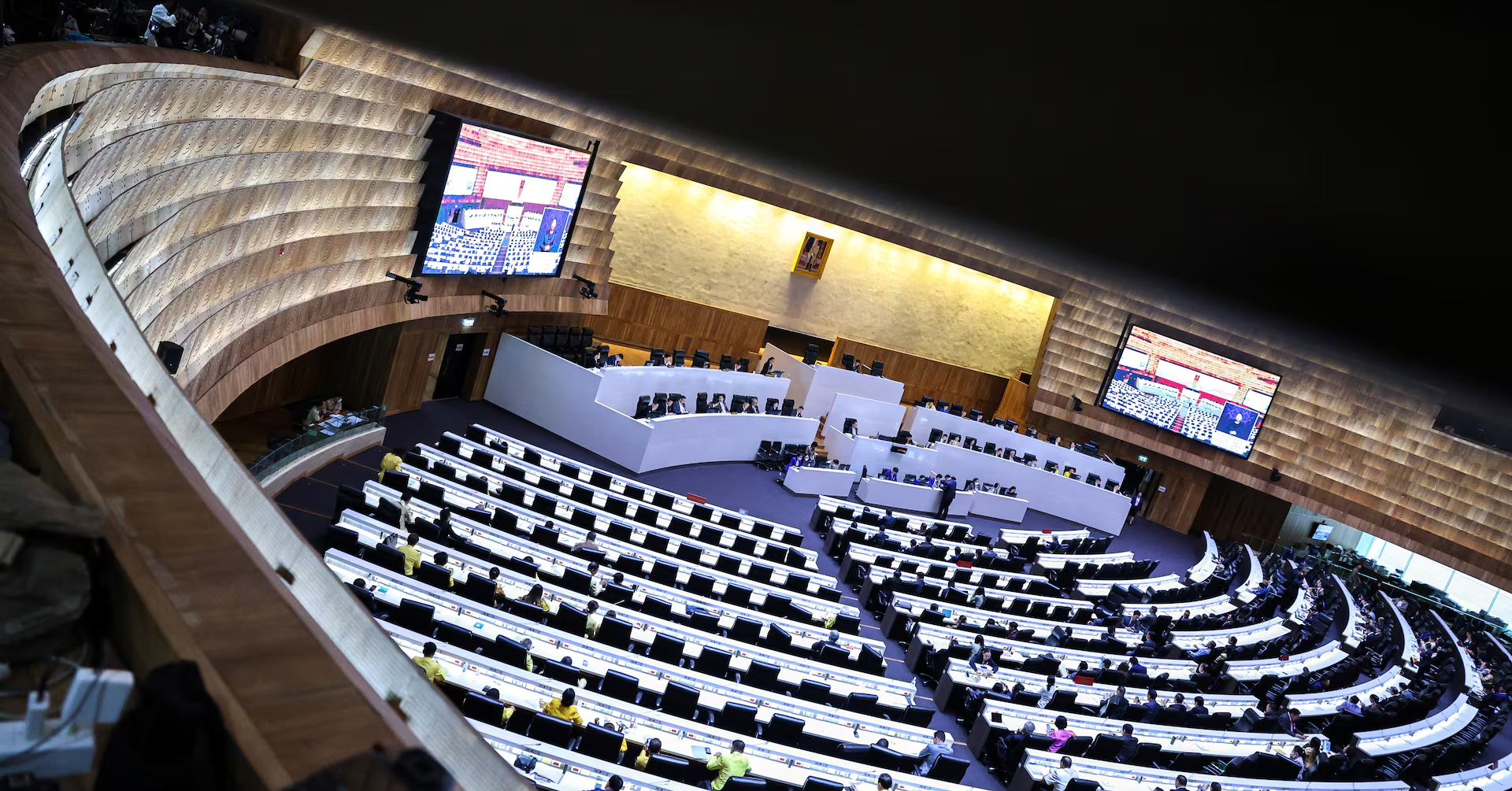









Thailand’s opposition walked out of a meeting at Parliament in Bangkok on Thursday, October 22, after failing to agree with the government on how long lawmakers should spend debating a no-confidence motion against Prime Minister Anutin Charnvirakul and 17 of his ministers. The opposition wants five days of debate, while the government says it can offer no more than four days next week, followed by a vote on October 30, according to several news sources.
The meeting brought together government whips, opposition whips and a Cabinet representative, with First Deputy House Speaker Mallika Jiraphanwanich in the chair. It ended without a deal, marking the second time this parliamentary session that three-party talks on the debate schedule have broken down.
Under the government’s latest offer, the debate would run from October 26 to 29, with the vote on October 30. The Cabinet had first proposed October 27 to 29. After the opposition rejected that as too short, Paradorn Prissananantakul, a minister attached to the Prime Minister’s Office who represents the Cabinet at the talks, consulted the Cabinet again and returned with one extra day.
Government chief whip Korrawee Prissananantakul said the four days would provide 63 hours and 30 minutes in total, with 45 to 48 hours set aside for the opposition and the rest for ministers to respond. He told reporters that this was more time than the opposition had received in any censure debate held under the current constitution. He pointed to debates during Prayut Chan-o-cha’s government, when the opposition used between 33 hours and about 44 hours.
Korrawee said he was disappointed by the walkout. He argued that keeping all 18 ministers in the chamber for five full days would be difficult because of royal ceremonies and overseas trips, and noted that the prime minister is scheduled to travel abroad on the morning of October 31. Finding five or six consecutive days in December would be even harder, he said, given the prime minister’s commitments.
Opposition chief whip Parit Wacharasindhu of the People’s Party said the root of the dispute was the government’s attitude toward Parliament. He said the Cabinet had passed a resolution and sent a letter setting the debate dates before the three sides had even discussed them. In his view, that amounted to forcing the opposition to work within a timetable set by the government and weakening the House’s role in holding the executive to account.
Parit said the opposition had offered to push the debate back if ministers were busy in late October and early November, as long as it received five days. He said he asked Mallika to write to the Cabinet requesting available dates in November or December, before the session ends, but she did not accept the proposal. He questioned whether the Cabinet truly had no free days in the remaining two months of the session.
Democrat Party deputy leader Chaichana Dechdecho said he had suggested holding the debate from November 7 to 11, but the Cabinet indicated it was unavailable then as well. Korrawee said those dates would have to be checked against Cabinet commitments, including mobile Cabinet meetings and ministers’ foreign travel.
Another point of friction was Paradorn’s role in the talks. People’s Party MP Rangsiman Rome objected to his presence, arguing that he had a stake in the outcome of the debate. Korrawee responded that Paradorn has represented the Cabinet in the House since the session began and was not appointed specifically for the censure debate.
The motion was submitted to House Speaker Sophon Saram earlier this month. It targets Anutin in his roles as prime minister and interior minister, along with 17 other Cabinet members, all from his Bhumjaithai Party. Allegations named in the motion include manipulation of the 2024 Senate election and the government’s handling of the economy. Anutin has said he sees the debate as a fair process of democratic scrutiny, and several ministers have said they are ready to answer the opposition’s questions.
Mallika urged both sides to keep talking and work toward a solution. Korrawee, however, said the government had already moved as far as it could, and that whether the debate goes ahead next week now depends on the opposition’s willingness to negotiate.
With the government holding to its four-day offer, the opposition insisting on five days, and the prime minister due overseas on October 31, the schedule for the first no-confidence debate against Anutin’s second government remains unresolved. Until the two sides find common ground, the opposition’s long-promised challenge to the Cabinet has no confirmed date on the House floor.