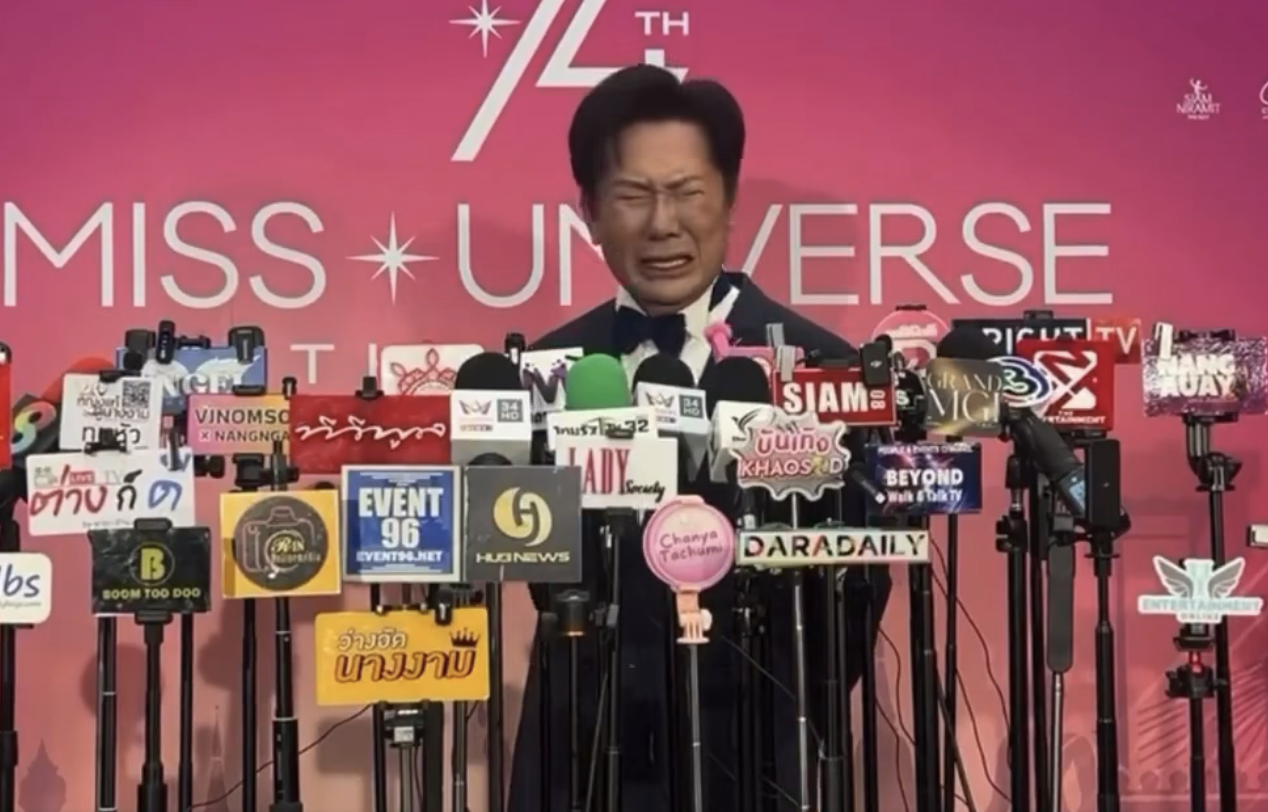









The Miss Universe 2025 competition, scheduled to take place later this month in Thailand, is facing one of the most serious image crises in its seven-decade history. A livestreamed confrontation between Thai organizer Nawat Itsaragrisil and a contestant representing Mexico has triggered widespread backlash and revived longstanding questions about his conduct within the international pageant industry.
The incident, broadcast from a pre-pageant event in Bangkok, showed Nawat addressing contestants while accusing one delegate of failing to fulfill promotional duties for the host country. During the exchange, his tone turned confrontational. He reportedly used demeaning language before security escorted the contestant out. The confrontation, viewed by millions online within hours, led to an immediate walkout by several participants.
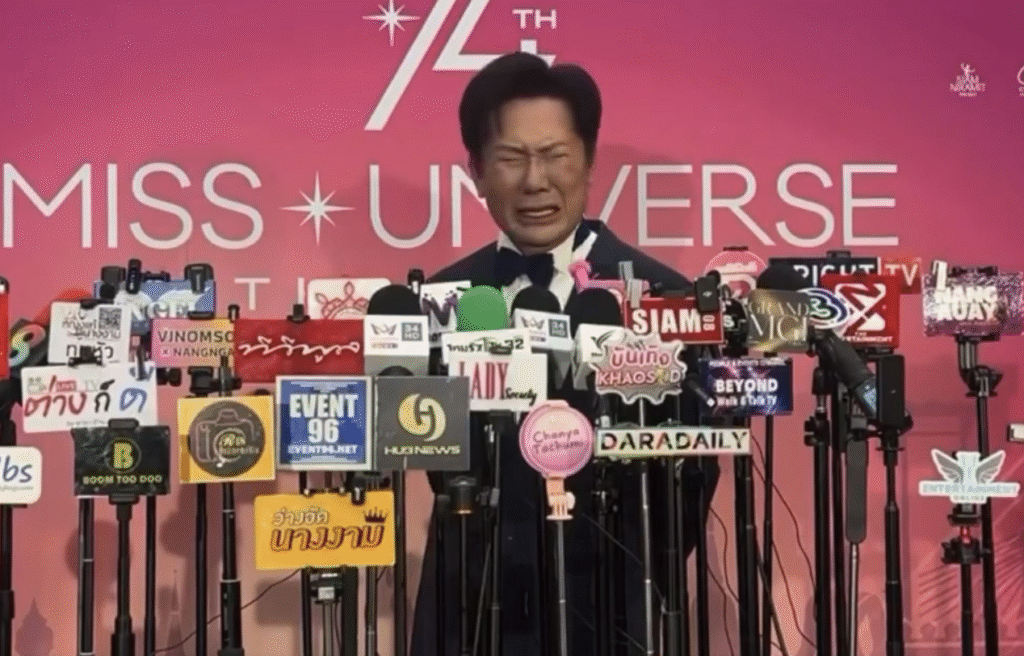
Critics domestic and international say Nawat is not actually apologetic of his actions
The Miss Universe Organization (MUO), which owns and operates the global franchise, responded by restricting Nawat’s role for the remainder of the competition and dispatching senior executives to Thailand to oversee proceedings. The organization emphasized that all participants are entitled to dignity, respect, and equal treatment throughout the competition.
The fallout has been swift. Pageant observers, sponsors, and former contestants have described the moment as a reckoning for an industry that often projects empowerment on stage while struggling with entrenched power imbalances behind the scenes.
The Bangkok Confrontation
The event at the center of the controversy took place during a routine sponsor and sashing session at a Bangkok convention venue. Delegates from over seventy countries were in attendance, along with production crews and local media representatives. According to accounts corroborated by multiple witnesses and visible in the livestream, Nawat confronted the contestant from Mexico over her absence from a host-country promotional shoot.
As he spoke, his remarks became increasingly personal, characterizing her behavior as uncooperative and disrespectful. The contestant attempted to respond, but he instructed her to remain silent and continued speaking. Moments later, staff escorted her from the room. Several contestants, reportedly upset by the tone of the exchange, walked out in solidarity.
The images circulated globally within minutes, sparking condemnation and calls for accountability. By the next day, the Miss Universe Organization had publicly acknowledged the incident, confirming that a review of internal procedures was underway.
Immediate Aftermath
Following the backlash, Nawat appeared in a separate interview visibly emotional. He expressed regret for the situation, saying he had not intended to humiliate anyone and describing himself as “only human.” Observers interpreted the remarks as an attempt to mitigate damage rather than a formal apology.
The Miss Universe Organization subsequently clarified that leadership of the event would transition to a newly appointed executive team for the remainder of the competition. The shift was widely interpreted as a rebuke of Nawat’s handling of the confrontation.
The incident has raised questions about the balance of authority between the Miss Universe Organization and its national directors, especially when local executives hold dual roles across multiple franchises.
Nawat’s Expanding Influence
Nawat Itsaragrisil is a prominent figure in Thai entertainment. He founded the Miss Grand International (MGI) pageant in 2013 and built it into a profitable brand with regional media partnerships and a significant social-media following. Earlier this year, his company acquired expanded rights to organize Miss Universe Thailand, integrating the national competition into his portfolio.
As Thailand prepared to host Miss Universe 2025, Nawat’s influence extended beyond the domestic franchise. He assumed operational responsibilities for logistical coordination, sponsorship integration, and production support for the global event. His visibility in the buildup to the competition made him one of the most recognizable figures associated with this year’s edition.
That prominence, however, also brought renewed scrutiny of his record.
Allegations of Misconduct Over the Years
Nawat has long been a polarizing figure within the beauty-pageant industry. Over the past decade, contestants and national directors have accused him of behavior ranging from verbal abuse to body-shaming and unprofessional conduct. While he has denied wrongdoing, the frequency of such allegations has contributed to a perception of an executive prone to controversy.
In 2016, Icelandic contestant Arna Ýr Jónsdóttir withdrew from Miss Grand International after alleging that Nawat told her she was “too fat” to compete and advised her to lose weight. The accusation generated international criticism and reignited debates about body image standards in global pageantry. Nawat later described the exchange as constructive advice, but the controversy damaged his reputation among many former contestants.
In 2024, the national director for Myanmar alleged that Nawat solicited a payment of 25,000 U.S. dollars in exchange for crown placement at the national level. Nawat denied the allegation, calling it false and defamatory. The dispute resulted in the Myanmar franchise losing its license for the following competition year.
During the same period, Rachel Gupta of India, who won Miss Grand International 2024, publicly described her experience as emotionally difficult, citing what she characterized as body-shaming, harassment, and a toxic working environment. Screenshots of social-media posts circulated online appearing to show Nawat comparing her appearance in before-and-after photos, implying cosmetic alteration. He later said the posts were intended as humor and not meant to offend.
Each of these episodes, individually disputed, has nonetheless formed a collective narrative of an executive whose style of management often crosses into personal territory.
The Broader Power Structure
The Miss Universe Organization, under new ownership since 2022, has promoted itself as a platform for inclusivity and empowerment. Its acquisition by a Thai media conglomerate was initially celebrated as a sign of the growing global reach of the competition. However, the overlap between Miss Grand International, Miss Universe Thailand, and now elements of Miss Universe 2025 has blurred lines of accountability.
Analysts say the concentration of control under one domestic executive carries reputational risks. When a single figure holds multiple licenses and production rights, the potential for conflicts of interest increases. Contestants representing other nations may perceive unequal treatment, while sponsors rely on assurances of transparency that can be difficult to verify under intertwined management structures.
For Thailand, which has invested heavily in hosting this year’s competition, the incident has created unwanted headlines. The event was intended to showcase the country’s hospitality and production capabilities, drawing visitors and boosting tourism revenue. Instead, the controversy has shifted global attention to questions of professionalism and ethics within the organizing team.
Industry Reaction
While most official responses from within the pageant community have been measured, privately many national directors and former contestants have acknowledged that the Bangkok incident reflects deeper systemic problems. Pageants operate on tight sponsorship schedules and intense marketing demands. Contestants are often expected to participate in promotional appearances that blur the line between voluntary and mandatory engagement.
When a contestant refuses or questions such directives, organizers can interpret it as insubordination. In the absence of independent oversight, disputes can escalate quickly. Critics argue that the pageant industry still operates under outdated power hierarchies, where deference to executives is expected and dissent is punished.
The Bangkok confrontation, captured live for a global audience, has turned those private tensions into public spectacle.
Accountability and Transparency
The Miss Universe Organization now faces the challenge of demonstrating that it can enforce standards of conduct consistently across its international network. While the organization’s public statements emphasize empowerment, equality, and respect, implementation often depends on local franchise holders and national directors.
If the investigation into the Bangkok incident concludes that procedural violations occurred, the organization may introduce new guidelines for host-country behavior, including mandatory professional-conduct training for executives and staff. Industry observers believe such reforms are essential to restoring public confidence.
There are also calls for greater independence between domestic franchises and the global parent organization. By limiting overlapping roles, Miss Universe could reduce potential conflicts of interest and create clearer accountability.
Nawat’s Position
As of this week, Nawat remains the president of Miss Grand International and the national director of Miss Universe Thailand. He has not resigned from his positions, though his involvement in Miss Universe 2025’s global activities has reportedly been curtailed.
In public remarks following the incident, he described himself as misunderstood, emphasizing the pressures of event management and cultural differences in communication style. His supporters argue that his directness has been misinterpreted, while critics maintain that a professional responsible for hundreds of delegates must adhere to higher standards of conduct.
The controversy has not only affected Nawat’s reputation but has also cast uncertainty over his broader media business, which relies heavily on branding partnerships and digital advertising revenue.
Impact on Contestants
For the women competing in Miss Universe 2025, the episode has overshadowed months of preparation. Many had arrived in Thailand expecting a celebration of culture and representation. Instead, they found themselves at the center of a debate over leadership and respect.
Although none of the contestants have issued official statements under their national affiliations, social-media posts suggest solidarity among participants who walked out of the room during the confrontation. Industry insiders note that such visible defiance is rare in pageantry, where participants are often contractually limited in what they can say publicly.
The collective response underscores a generational shift. Modern contestants increasingly view themselves as professionals and advocates, not merely symbols of beauty. The incident has highlighted their willingness to challenge authority when they believe boundaries have been crossed.
The Road Ahead
The Miss Universe 2025 finals remain scheduled for November 21 in Nonthaburi, just outside Bangkok. The competition is expected to proceed under tightened management and new oversight procedures. However, reputational damage may linger well beyond the crowning moment.
Analysts expect the organization to implement visible reforms, including stricter codes of conduct for national directors and clearer reporting channels for contestant grievances. Sponsors are also expected to demand higher levels of transparency before renewing contracts for future editions.
As for Nawat Itsaragrisil, his next steps remain uncertain. While he retains substantial influence in the Thai entertainment industry, the controversy has exposed vulnerabilities in his brand. The Miss Grand International pageant, which he founded and controls, faces questions about its own internal culture. Whether he can rehabilitate his image will depend on how he handles the aftermath of this crisis — and whether future actions match the contrition he has expressed publicly.
A Moment of Reckoning
The Bangkok incident may prove to be a watershed moment for the global pageant industry. The convergence of livestreamed exposure, instantaneous online reaction, and public demand for accountability has transformed what might once have been an internal disciplinary issue into a symbol of cultural change.
What was once dismissed as backstage gossip has become a conversation about leadership, respect, and power. For an industry built on presentation, image, and aspiration, the challenge now is authenticity.
Miss Universe, a brand that markets empowerment, must demonstrate that empowerment applies equally to those who compete and to those who manage them. Its response to this controversy will determine whether it remains a credible global platform or becomes another example of spectacle masking dysfunction.
For Thailand, the stakes are equally high. Hosting the event was meant to reinforce the nation’s status as a regional hub for entertainment and tourism. Instead, the focus has shifted to the behavior of one of its most visible media figures. How the country’s pageant institutions respond will influence whether this year’s Miss Universe is remembered for its winners or its wounds.
At its heart, the Miss Universe controversy is about the disconnect between words and actions — between the promise of empowerment and the practice of control. The cameras captured more than an argument in a ballroom; they captured a moment of truth for an entire industry.
Until those responsible for its image embody the values they promote, the crown itself will remain tarnished.