








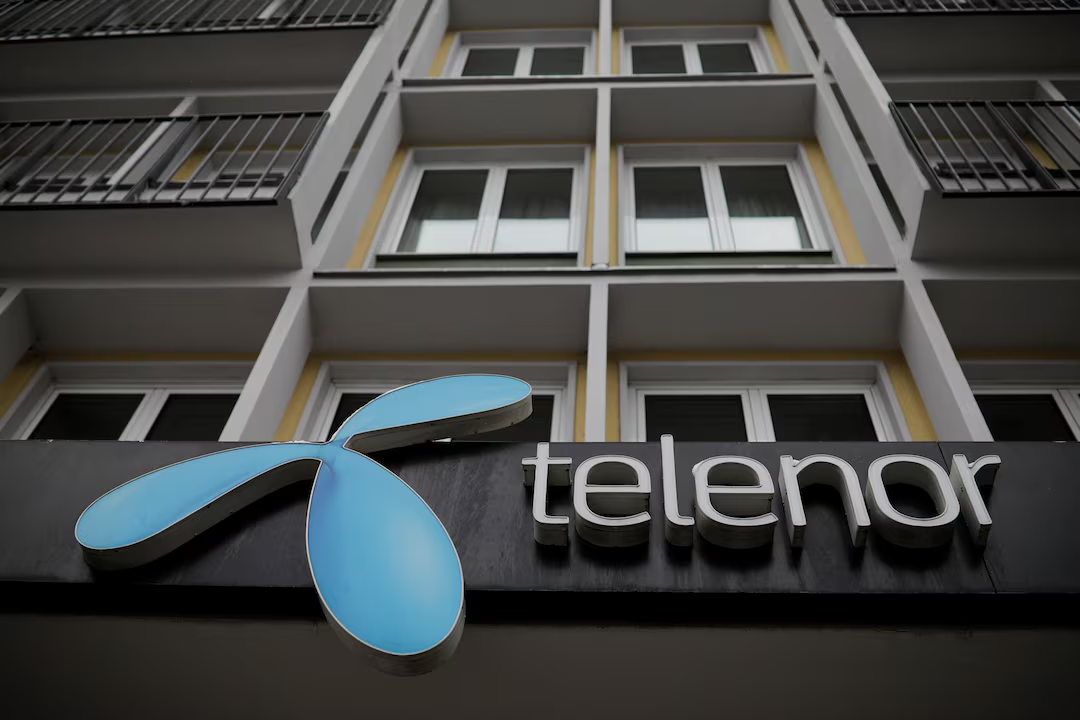
Norwegian telecommunications group Telenor has continued its retreat from Asia as it sharpens its focus on core Nordic markets, a move that reflects broader shifts in global telecom strategy and has implications for countries where the company once played a major role.
The decision marks a clear pivot away from emerging markets, where regulatory complexity, capital intensity, and uneven returns have increasingly challenged foreign operators. For Telenor, Asia was once central to its growth story, but the company has steadily reduced its footprint in recent years as it reassesses risk and long-term priorities.
Executives have signaled that future investment will concentrate on markets where regulatory environments are more predictable and margins more stable. Nordic countries offer mature infrastructure, strong consumer purchasing power, and clearer paths to monetizing next-generation networks, making them more attractive in a period of rising costs and economic uncertainty.
The shift reflects a wider trend across the telecom industry. Building and maintaining mobile networks requires sustained capital investment, while competitive pressures often limit pricing flexibility. In emerging markets, these challenges are compounded by currency volatility, spectrum costs, and policy uncertainty, all of which can weigh on long-term returns.
For Asian markets, Telenor’s exit underscores changing dynamics in foreign investment. While demand for connectivity remains strong, global operators are becoming more selective about where they deploy capital. Local and regional players are increasingly filling the gap, often with closer ties to regulators and a deeper understanding of domestic market conditions.
From a strategic standpoint, Telenor’s move also highlights the growing divide between scale and focus. Rather than pursuing geographic expansion, the company appears to be prioritizing operational efficiency and technological leadership in fewer markets. This approach aligns with industry efforts to improve profitability through network sharing, digital services, and cost discipline.
The withdrawal does not signal a decline in Asia’s importance to the global telecom sector, but it does suggest a recalibration of who is best positioned to compete there. Domestic operators, state-backed firms, and regional conglomerates may find themselves with greater influence as Western companies reassess exposure.
There are also implications for consumers and regulators. Foreign exits can raise questions about competition, service quality, and long-term investment levels. At the same time, they can open opportunities for consolidation or innovation led by local firms with a longer-term commitment to the market.
For Telenor, the challenge now lies in delivering growth closer to home. Nordic markets are technologically advanced but highly competitive, with limited room for subscriber expansion. Success will depend on extracting more value from existing customers, expanding digital services, and managing network upgrades efficiently.
As global economic conditions remain uncertain, Telenor’s retrenchment reflects a broader corporate instinct to prioritize stability over expansion. Whether this strategy proves resilient over the long term will depend on how effectively the company balances innovation with discipline in its core markets.
112

previous post