








Thailand has begun taxing online imports from the first baht as of January 1, 2026, ending a long-standing exemption for low-value goods and prompting swift adjustments across e-commerce platforms, logistics providers, and customs operations.
The change removes the previous de minimis threshold that allowed small overseas purchases to enter the country without value-added tax. Authorities say the exemption had become increasingly difficult to defend as cross-border online shopping surged, allowing foreign sellers to compete with domestic retailers without facing the same tax obligations.
Under the new rules, VAT now applies to all imported online purchases regardless of price. Overseas platforms selling to Thai consumers are required to register with the Revenue Department, collect tax at the point of sale, and submit transaction data through updated customs systems. Logistics companies handling imports must also verify tax compliance before parcels are released to customers.
Government officials argue the policy brings Thailand in line with international practices already adopted in markets such as the European Union, Australia, and Singapore. They say the previous system distorted competition, encouraged shipment splitting to avoid tax, and placed Thai retailers at a structural disadvantage.
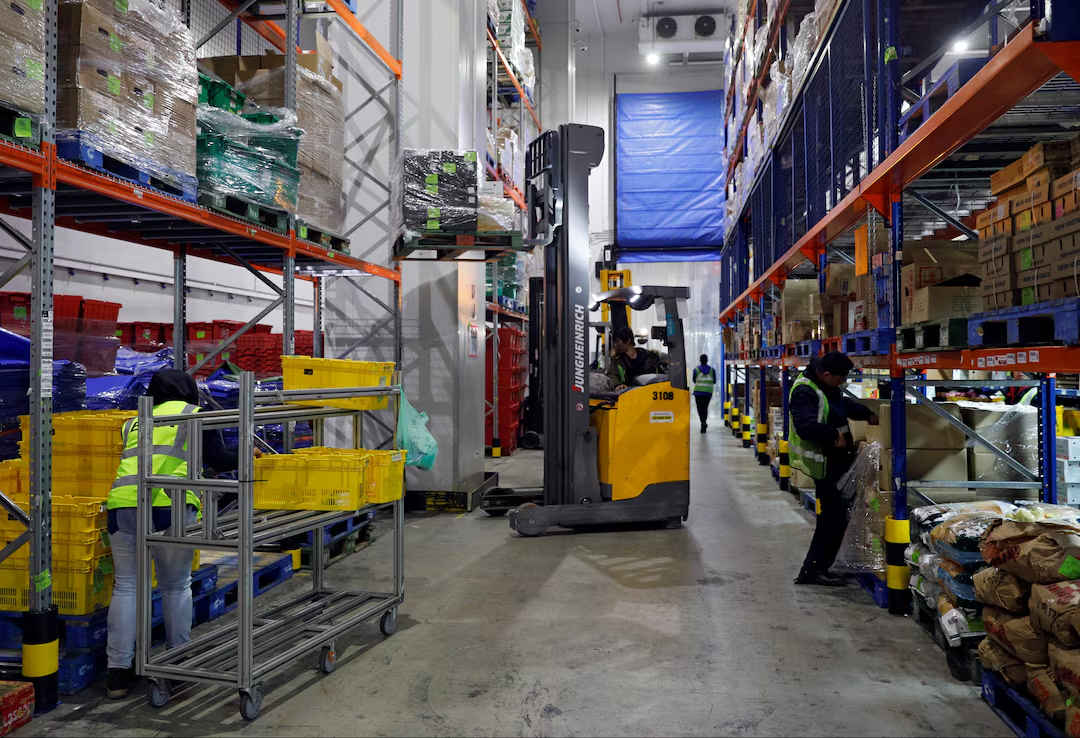
The transition, however, has not been frictionless. Logistics operators report heavier administrative workloads in the first days of implementation, particularly for parcels shipped before the new year but arriving after the rule took effect. In some cases, shipments have been delayed as customs officers reconcile documentation and tax status under the new framework.
Several major e-commerce platforms have updated checkout systems to include VAT on overseas purchases, while others have temporarily suspended certain cross-border listings as they adjust internal processes. Industry sources say smaller foreign sellers, in particular, are struggling to understand Thailand’s registration and reporting requirements.
For consumers, the most immediate impact has been higher final prices on overseas purchases. While the tax applied to low-cost items is relatively small in absolute terms, consumer advocates note that frequent buyers of inexpensive goods are feeling the cumulative effect. Online forums and social media platforms have already seen complaints from shoppers surprised by added charges on items that were previously tax-free.
Domestic retailers have largely welcomed the change, arguing that it addresses a long-standing imbalance. Business groups representing Thai sellers say the exemption had encouraged consumers to bypass local platforms, even when price differences were marginal. They believe the new rules could help redirect some spending back toward domestic businesses, though the scale of that shift remains uncertain.
Economists caution that while the policy is likely to improve tax fairness and revenue collection over time, short-term disruption is inevitable. Compliance costs for platforms and logistics firms may be passed on to consumers, at least initially, and enforcement consistency will be critical to maintaining confidence in the system.
The Revenue Department has said it will continue issuing guidance and conducting outreach to affected businesses during the transition period. Officials have also indicated that enforcement will focus first on large platforms and high-volume sellers before expanding more broadly.
As online shopping continues to reshape consumer behavior in Thailand, the end of the low-value import exemption marks a significant recalibration of the country’s digital trade framework. Whether the change meaningfully alters purchasing patterns—or simply becomes an accepted cost of cross-border shopping—will become clearer in the months ahead.