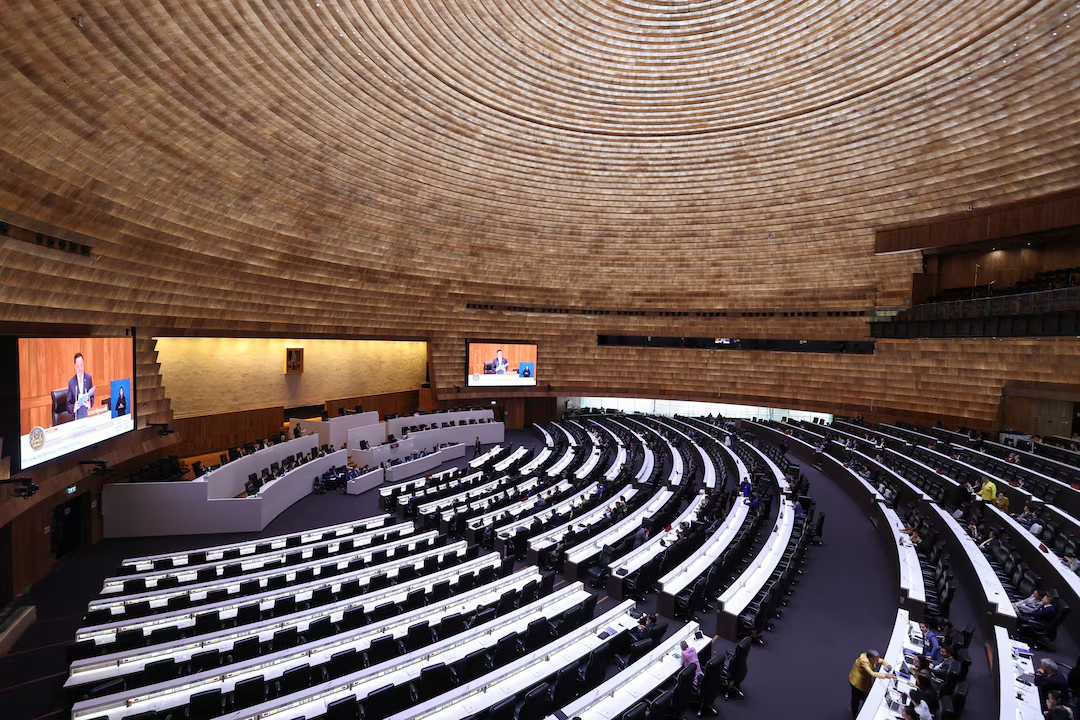









Thailand will hold a snap general election on Feb. 8, 2026, following the dissolution of parliament earlier this month, the Election Commission has confirmed, launching a compressed political calendar ahead of the vote.
The dissolution of the House of Representatives triggered a constitutional requirement to hold a general election within a limited timeframe. Election officials said candidate registration will open on Dec. 27, leaving political parties with just weeks to finalize nominees, confirm party-list candidates, and formalize campaign strategies.
The Election Commission has ruled out any delay to the vote, despite questions raised over regional security conditions. Officials said preparations are proceeding on schedule and that constitutional deadlines must be respected. Administrative planning, including ballot preparation and coordination with security agencies, is already underway.
In recent guidance to political parties, the commission has emphasized tighter scrutiny of campaign policies, particularly proposals involving large public spending commitments. Parties have been instructed to formally notify regulators of their policy platforms earlier than in previous elections, a move aimed at reducing disputes over campaign promises after polling day.
The commission has also confirmed that a referendum linked to potential constitutional amendments may be held on the same day as the general election. If approved, the referendum would allow voters to decide whether to move forward with a broader charter rewrite process, an issue that has remained politically sensitive for years.
The possibility of holding both a general election and a referendum on the same day is intended to streamline logistics and reduce costs, but it also raises the stakes of the vote. Political analysts say parties are likely to incorporate constitutional reform messaging more prominently into their campaigns as a result.
The upcoming election comes at a time of heightened political uncertainty. Public debate has intensified around governance standards, economic management, and institutional reform, while households continue to face cost-of-living pressures. With a shortened campaign window, policy credibility and coalition arithmetic are expected to play an outsized role.
Voters’ immediate focus now turns to the end of December, when candidate registration begins and the shape of the electoral contest becomes clearer. From that point, campaigns are expected to move quickly, with rallies, policy announcements, and coalition signaling accelerating into the new year.