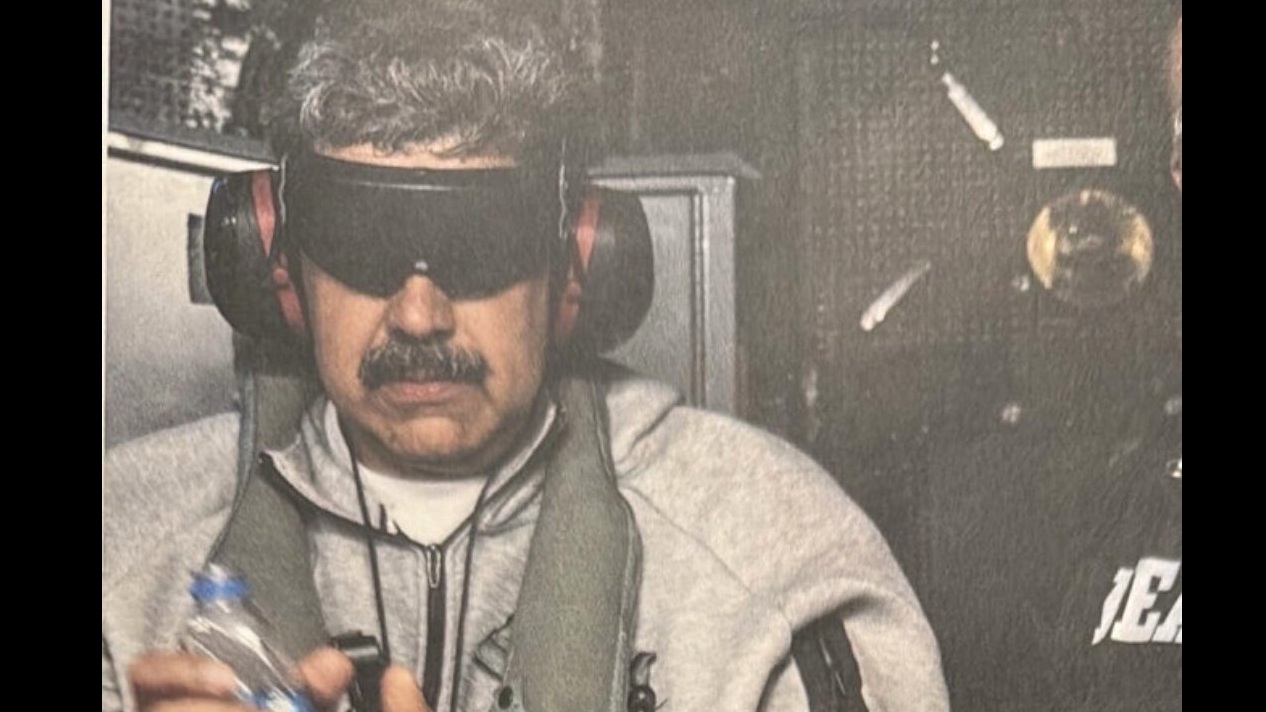
In early January, Venezuela was thrust into a new phase of political uncertainty when U.S. forces captured President Nicolás Maduro during a military operation in Caracas. This unprecedented move by Washington, which was linked to long-standing criminal charges of drug trafficking and corruption, has sent shockwaves through Venezuela and beyond, triggering global condemnation and raising complex questions about international law and the use of force.
The capture of Maduro, along with his wife, Cilia Flores, has created a power vacuum in Venezuela. The country’s political leadership quickly declared Vice President Delcy Rodríguez as the interim president, citing constitutional continuity and the support of security forces. However, the opposition and human rights groups have questioned the legitimacy of this transition, warning that the situation could be used to further restrict political freedoms.
Inside Venezuela, conditions have rapidly deteriorated. Armed pro-government militias and increased military patrols have been deployed across Caracas and other key cities, while government buildings and media outlets have been placed under tight control. The government has attempted to maintain a semblance of stability, but widespread fear and uncertainty have set in, with local reports describing an atmosphere of intense tension.
The international community’s reaction has been deeply divided. The United Nations Human Rights Office expressed concern about the legality of capturing a sitting head of state, emphasizing the potential consequences for global norms. Meanwhile, some Latin American countries have criticized the operation as an illegal intervention, while others have supported the U.S. move, arguing it was necessary to hold Maduro accountable for his alleged role in drug trafficking and corruption.
The geopolitical consequences of this action are still unfolding. Venezuela, which holds some of the world’s largest oil reserves, remains an important player in the global energy market. While oil production has declined in recent years, the country’s energy sector still has the potential to shape global markets. Analysts are watching closely, as any prolonged political instability could further complicate energy dynamics and fuel volatility in an already tense region.
Domestically, Venezuela’s already fragile economy is under even more strain. Years of hyperinflation, shortages, and currency devaluation have left many Venezuelans struggling to make ends meet. With Maduro’s capture, there are concerns that the political turmoil will exacerbate the ongoing economic collapse, leading to more capital flight and worsening shortages of basic goods.
As the situation continues to evolve, the international community is keeping a close eye on how Venezuela’s political institutions will respond. Will Maduro’s ousting lead to negotiations, or will it escalate the crisis further? For now, the future of Venezuela’s political landscape remains highly uncertain, with implications that could reach far beyond the country’s borders.