









When 34-year-old Zohran Mamdani secured victory as mayor of New York City on November 4, 2025, it did more than break records — it sent a message that resonated around the world. Mamdani became the city’s 111th mayor, the first person of Muslim faith and South Asian heritage to hold the office, and its youngest mayor in more than a century.
His win marks a powerful shift in modern politics — one in which grassroots power, representation, and affordability matter more than wealth or political connections. Mamdani ran on a platform focused on housing, public transit, and social equity, promising to freeze rents, build 200,000 affordable homes over the next decade, make city buses fare-free, expand universal childcare, and create city-run grocery stores to stabilize food prices.
While the election was local, its implications reach far beyond New York. In Asia — where many societies are experiencing generational and economic transitions — Mamdani’s victory may foreshadow a moment of awakening. Across Bangkok, Manila, and Jakarta, voters are increasingly rejecting old-school politicians who rely on lineage, corporate ties, and slogans. They are demanding leaders who understand their daily struggles and can deliver tangible results.
Mamdani’s campaign embodied that change. He refused to let identity politics define him, but he didn’t shy away from who he was. As a Muslim, a son of immigrants, and a democratic socialist, he embraced his identity as part of his political vision — proving that inclusion and competence can coexist. That approach resonated deeply in New York, a city built on diversity and contradiction, and it may prove equally resonant in countries across Asia.
“New York is too expensive. I will lower costs and make life easier,” his campaign declared. It was a message that could easily apply to any major Asian city, where inflation, rent, and inequality are growing crises. Mamdani’s platform — fare-free public transport, housing reform, universal childcare — may sound idealistic, but it directly addressed the daily struggles that define urban life worldwide.
During the campaign, Mamdani faced Islamophobic attacks and establishment resistance. Yet voters rejected fear and chose inclusion. They elected him not because of his background, but because of his honesty and ideas. That choice — courage over cynicism — has significance far beyond American borders.
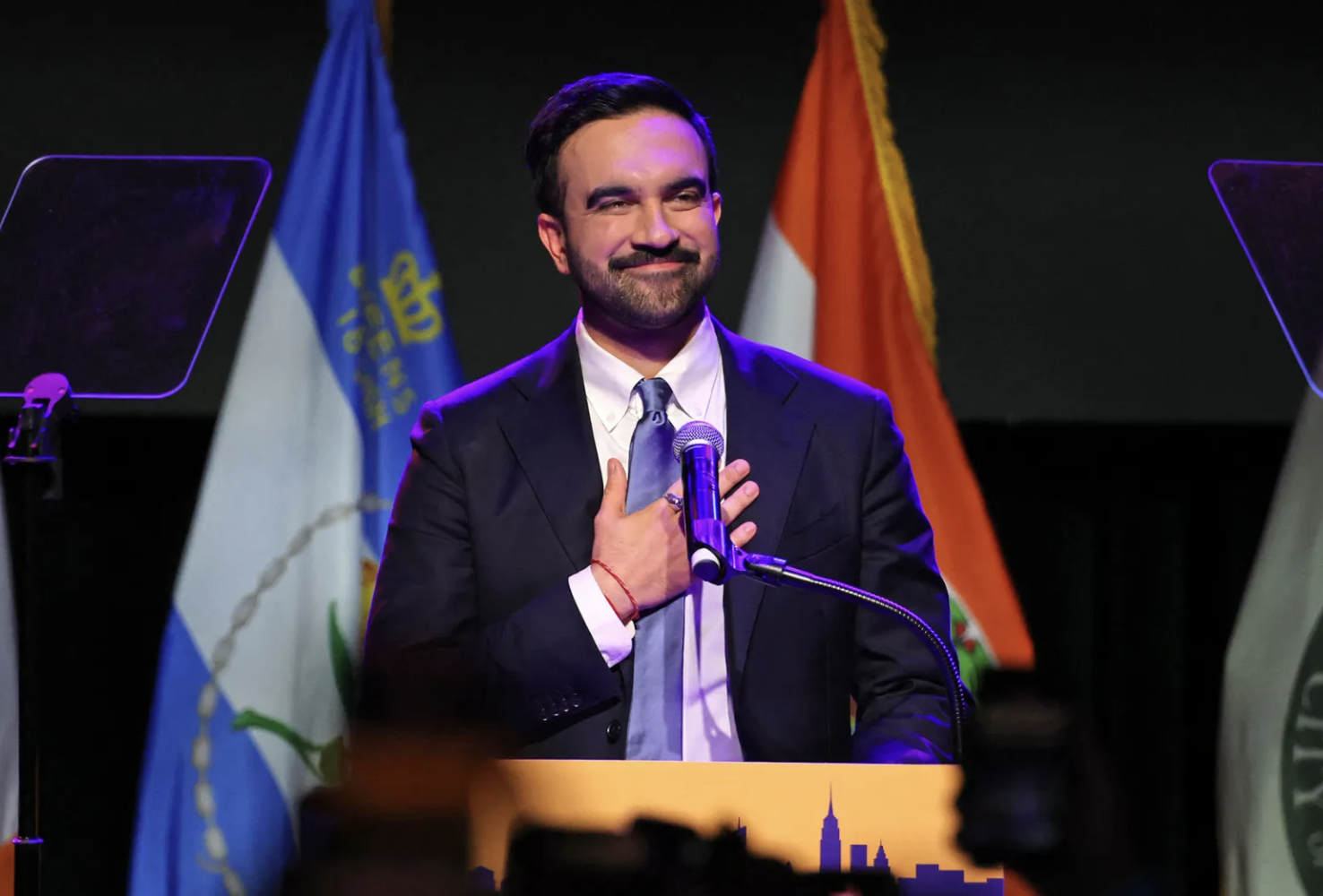
Zohran Mamdani won by a whopping 50% landslide.
For Asia’s entrenched political class, Mamdani’s victory is a warning. The age of passive electorates is ending. Digital connectivity means that what happens in New York no longer stays there. Young Asians, online and aware, are watching how grassroots movements can defeat power structures once thought unshakable. They are drawing inspiration from how authenticity, empathy, and organization can overcome privilege and fear.
In Thailand, Mamdani’s win has already sparked conversation across online forums and local commentary, particularly among younger audiences interested in reform. Observers have noted that his rise reflects a wider global fatigue with politics built on personality and patronage. The sentiment mirrors a growing frustration shared by Asia’s younger voters — a generation that wants transparency, accountability, and leaders who treat public office as a duty, not inheritance.
The economic dimension of Mamdani’s proposals also resonates. Making buses fare-free in New York is projected to cost less than a billion dollars annually — a figure comparable to what many Asian capitals spend on infrastructure projects that serve only a few. Building affordable housing at scale and expanding childcare would require immense political will, but the ambition itself — to use policy for equality rather than profit — offers a model worth studying.
Delivering on these promises will test Mamdani’s leadership. Many of his reforms will require cooperation from state and federal authorities, as well as fiscal discipline. Yet even if only some are realized, the precedent has been set: the people of one of the world’s most powerful cities chose an agenda rooted in fairness and inclusion over one built on fear and the status quo.
Change often begins in cities — the testing grounds of democracy and progress — and then spreads outward. From housing reform in New York to green transit in Seoul or civic innovation in Bangkok, urban governance shapes the national future. As Asia’s cities expand and their citizens grow more vocal and interconnected, the call for new leadership will only intensify.
Mamdani’s win proves that barriers once seen as permanent — religion, age, outsider status — can be dismantled. For Asia, this means that leadership may no longer be defined by pedigree but by performance. It signals that political renewal doesn’t require upheaval — it requires courage, conviction, and connection.
Zohran Mamdani’s victory is both milestone and mirror: a reflection of a world ready for change and a reminder that democracy still has the power to surprise. For Asia, it offers not just inspiration but a challenge — to listen to the people who have been waiting too long for something better.
If New York can elect a mayor who ran on fairness and reform, then perhaps Bangkok, Manila, and Kuala Lumpur are closer to their own awakenings than they realize. The question is no longer whether change will come — but how soon.
