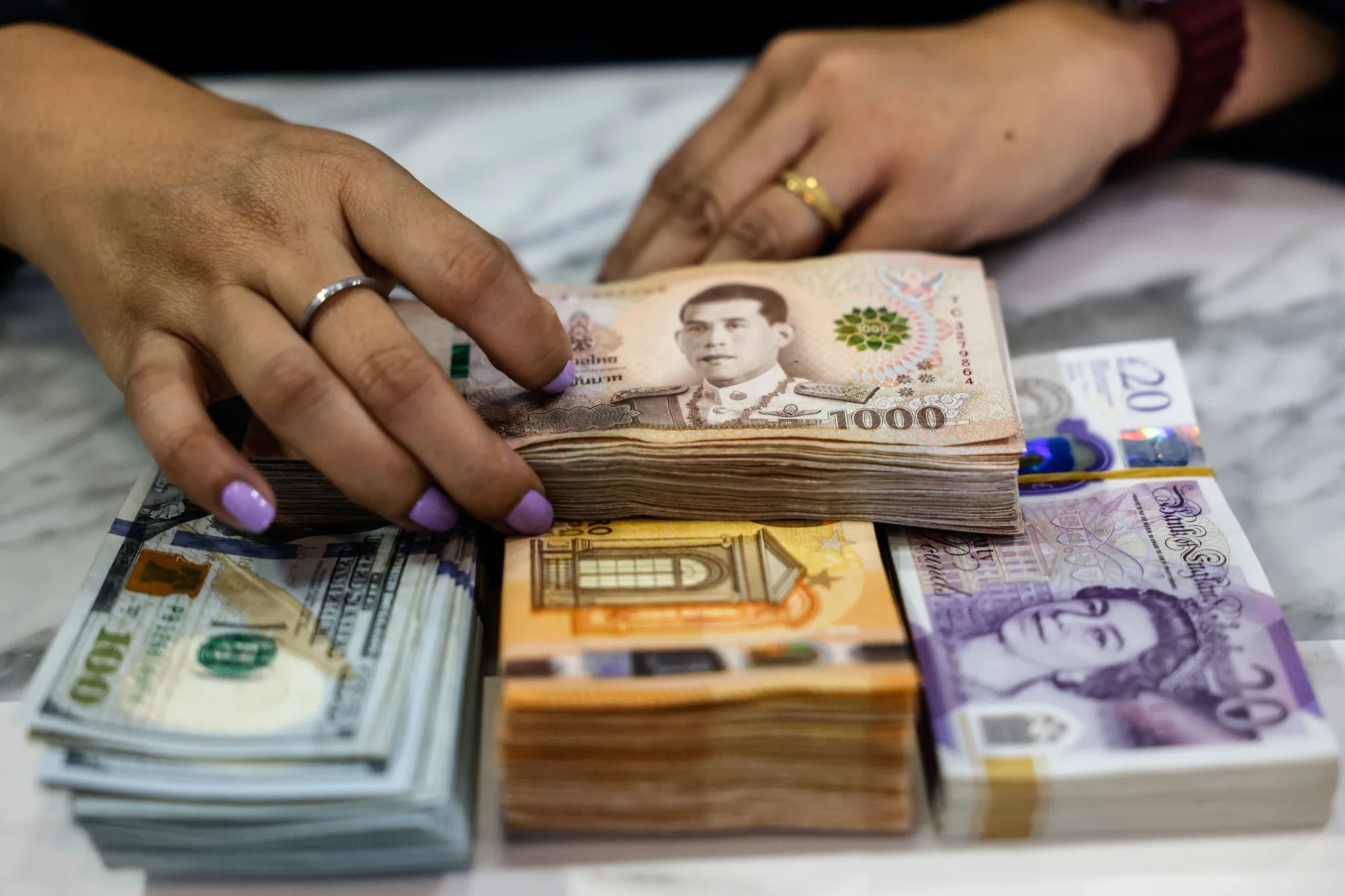









The Thai baht continued to trade near its stronger levels against the U.S. dollar late last week, keeping currency movements in focus as markets assessed recent central bank signals and broader regional developments that could influence investor sentiment.
Reference rate data published by the Bank of Thailand showed the baht holding within a relatively narrow range through mid-December, remaining firmer than levels seen earlier in the year. While daily movements have been modest, the broader trend has kept exporters, tourism operators, and policymakers closely watching the currency’s direction and volatility.
The conversation around the baht intensified following the central bank’s recent decision to cut its policy rate to 1.25 percent. Interest rate reductions typically reduce the appeal of holding a currency, but Thailand’s exchange-rate dynamics have not followed a simple interest-rate story. Central bank officials have repeatedly emphasized that factors beyond monetary policy are playing a significant role.
One such factor is gold trading. Thailand has one of the most active gold markets in the region, and large gold-related transactions can generate sizeable foreign exchange flows. Central bank officials have pointed to these flows as a source of abrupt currency movements, noting that they can amplify volatility even when broader economic fundamentals remain unchanged.
For exporters, a strong baht can erode competitiveness by making Thai goods more expensive in foreign markets once revenues are converted back into local currency. Tourism operators also track exchange rates closely, as currency strength can influence visitor spending power. At the same time, a firmer baht can help reduce import costs, including for energy and raw materials, offering some relief to businesses dependent on foreign supplies.
The Bank of Thailand has sought to strike a careful balance in its messaging. Officials have stressed that they are not targeting a specific exchange-rate level, but rather aiming to limit excessive volatility that can disrupt business planning and pricing decisions. In public remarks, policymakers have signaled openness to targeted measures that could smooth abrupt flows without destabilizing financial markets.
Currency markets are also responding to developments beyond Thailand’s borders. Heightened geopolitical tensions in the region, including a serious border conflict between Thailand and Cambodia, have introduced additional uncertainty. While economic activity in Thailand’s main commercial centers continues largely as normal, markets tend to react quickly to regional security headlines, even when direct economic effects are limited.
Global factors have also shaped currency behavior. Movements in the U.S. dollar, expectations around U.S. interest rates, and shifts in global risk appetite continue to influence capital flows across emerging markets, including Thailand. As a result, the baht’s performance reflects a mix of domestic policy signals and external pressures.
For households, currency movements are often felt indirectly. Changes in the baht can affect prices of imported goods, overseas travel costs, and, over time, inflation trends. While short-term fluctuations may not immediately translate into noticeable price changes, sustained currency strength or weakness can filter through to consumer costs.
Analysts say the near-term outlook for the baht remains sensitive to central bank guidance, gold-related flows, and regional developments. With policymakers signaling vigilance rather than intervention, markets are likely to remain cautious, watching for any indication that authorities may move beyond verbal guidance to curb volatility.
For now, the baht’s ability to hold near its recent levels underscores the complexity of Thailand’s currency dynamics, where domestic policy, global markets, and region-specific factors intersect.