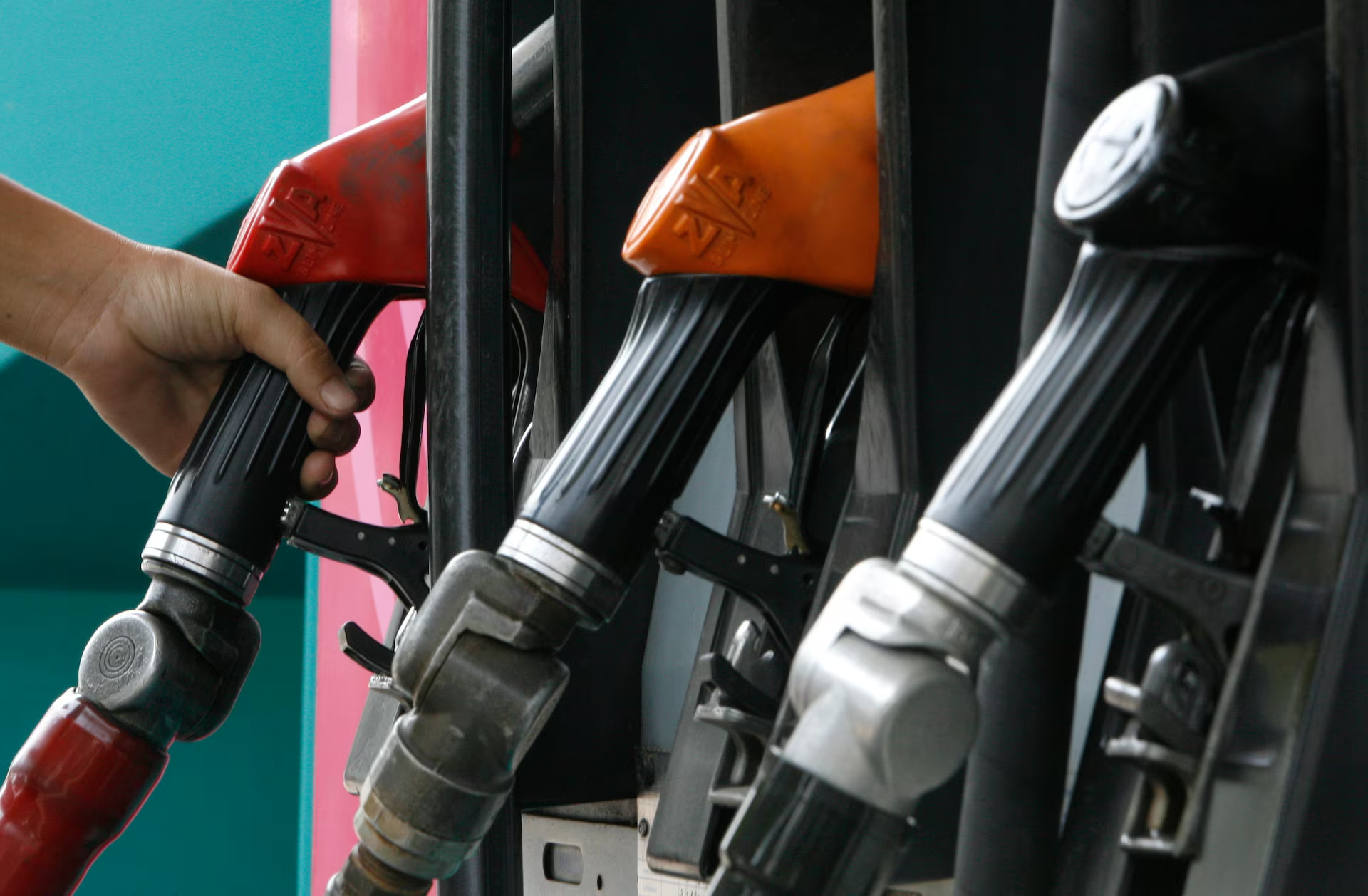









Thailand’s energy regulators took two separate actions this week that pull fuel costs in opposite directions: retail pump prices rose by 90 satang per liter on Thursday, while a new cut to diesel prices at the refinery level is set to take effect Friday, according to several news sources.
The Fuel Fund Executive Committee approved the retail increase at a meeting on Wednesday, and the new rates took hold at 5 a.m. Thursday, July 23. Standard high-speed diesel climbed to 36.69 baht per liter, gasohol 95 rose to the same level, gasohol 91 reached 36.32 baht, and regular gasoline hit 45.68 baht. Premium fuel products were left out of the increase. The quoted rates apply nationwide but exclude Bangkok’s local maintenance tax, meaning prices in the capital run slightly higher.
The committee pointed to a fresh escalation of fighting in the Middle East, following the breakdown of recent negotiations, as the driver behind the hike. The fighting has disrupted major shipping routes and pushed global oil costs upward, adding pressure to Thailand’s Oil Fuel Fund, the mechanism the government uses to subsidize pump prices. Officials said the fund is now absorbing a subsidy burden of roughly 651 million baht a day. To manage that strain, the committee raised the subsidy rate on standard diesel by 0.78 baht per liter and on diesel B20 by 0.56 baht, while trimming the amount collected from gasoline sales into the fund. The panel also appealed for public understanding and asked drivers to conserve fuel where possible.
At the same time, a different body, the Committee on Energy Policy Administration, approved a measure working in the other direction for diesel specifically. The committee cut ex-refinery prices for three diesel grades, B0, B7 and B20, by 2.40 baht per liter, effective Friday, July 24, running through August 15.
Energy Minister Akanat Promphan said the reduction is meant to draw on excess profits refineries have collected during a period of unusually wide margins, passing some of that value back to consumers without threatening refiners’ ability to operate. The ministry reviewed global oil prices and refining costs for the first half of July and found that margins remained elevated even as markets stayed volatile because of the region’s geopolitical tensions. Based on Thailand’s fuel consumption in June, officials estimated the value of those excess gains at close to 3.9 billion baht for the first half of July alone, and that sum will fund the temporary discount. The committee also instructed its secretariat to publish the measure in the Royal Gazette.
Together, the two moves show Thai energy officials trying to manage the same problem, rising global oil costs, from two different points in the supply chain. Raising retail prices keeps the Oil Fuel Fund solvent in the near term, while squeezing refiners’ margins is meant to ease costs further upstream. It isn’t yet clear whether the ex-refinery cut will produce a matching drop in pump prices, since retail rates are set independently by the Fuel Fund committee and could just as easily be absorbed by the fund itself rather than passed on to drivers.
For now, the practical effect for most Thai motorists is a modest increase at the pump this week, even as the government positions the refinery-level cut as relief still to come. Energy officials have not indicated whether further adjustments are planned before the ex-refinery measure expires on August 15, and much will depend on how shipping conditions and prices in the Middle East evolve in the coming weeks.