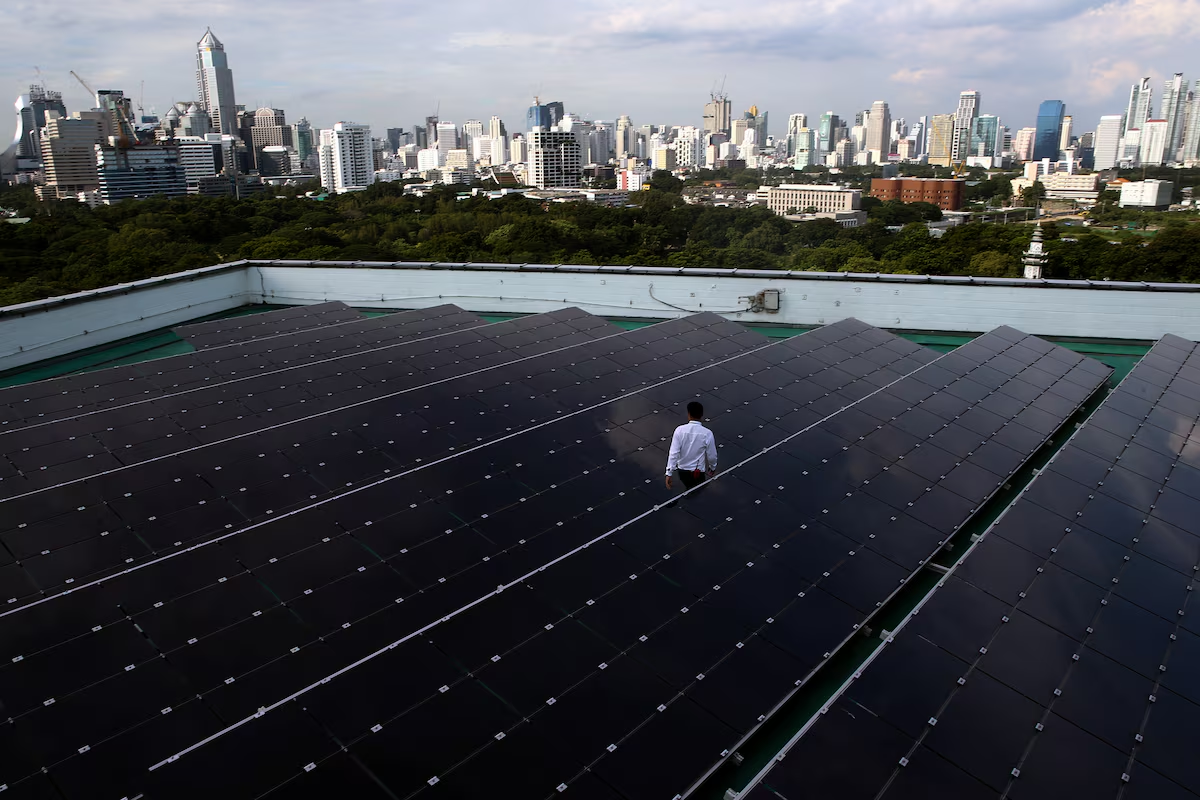









More than 50,000 Thai households registered on the first day of the government’s new solar program, which pays 50,000 baht toward a qualifying home solar system, according to several news sources. Registration opened on Tuesday, October 27, through the Provincial Electricity Authority (PEA) and the Metropolitan Electricity Authority (MEA), and runs until January 31, 2027. The program aims to cut household power bills and move the country toward clean energy.
The Cabinet approved the program, called People’s Solar, on October 27 with a budget of 50 billion baht. That’s enough for up to 1 million households, and the government has said it may expand the scheme to 1.5 million homes. The funding comes from the energy transition portion of the government’s borrowing program.
On Thursday, deputy government spokeswoman Lalida Periswiwatana urged people to read the terms and conditions before applying. Several of those conditions could catch applicants off guard.
Applicants must be Thai citizens, and the name on the registration must match the owner of a residential electricity meter. Each meter qualifies for one subsidy, and each person can use the right only once. Systems must be between 5 and 10 kilowatts. Rooftop, ground and floating installations all qualify. Homes that already have panels can add more, as long as the new portion is at least 5 kilowatts.
The money isn’t paid upfront. The 50,000 baht is released only after the system has been installed and connected to the grid under the program’s rules. Tax invoices for equipment and installation must be dated October 27 or later, so anything bought before registration opened won’t count.
The subsidy also can’t be combined with the existing personal income tax deduction of up to 200,000 baht for rooftop solar, in full or in part. The government has pointed out that the deduction is a tax benefit based on actual spending, while the new program pays cash directly toward a system.
State welfare cardholders can take part, but they must give up their 315 baht monthly electricity assistance for 20 years. That period starts on the day their system connects to the grid. Their other welfare benefits aren’t affected. Over two decades, the electricity aid they give up adds up to 75,600 baht, which is more than the subsidy itself. The government has urged cardholders to check this condition carefully before joining.
The subsidy covers only part of the cost of a system. A standard 5 kilowatt package should cost no more than about 140,000 baht, leaving roughly 90,000 baht for the household to pay. To help with the rest, three state banks are offering installation loans at 2.5% a year with repayment over about seven years: the Government Savings Bank, the Government Housing Bank and the Bank for Agriculture and Agricultural Cooperatives.
Households can also earn money from their panels. Participants get a free smart meter, and they can sell up to 5 kilowatts of surplus power to the PEA or MEA at 2.20 baht per unit for 20 years under a net billing system. Income from those sales can go toward repaying the loan. An earlier buyback scheme, relaunched in 2024, offered the same rate, but its contracts lasted only 10 years.
With more than three months of registration still ahead, there’s plenty of time for households to weigh their options. For most families, the decision comes down to two questions: how they will cover the rest of the cost, and, for welfare cardholders, whether a one-time 50,000 baht grant is worth giving up 20 years of electricity aid. Registration remains open through January 31, 2027.