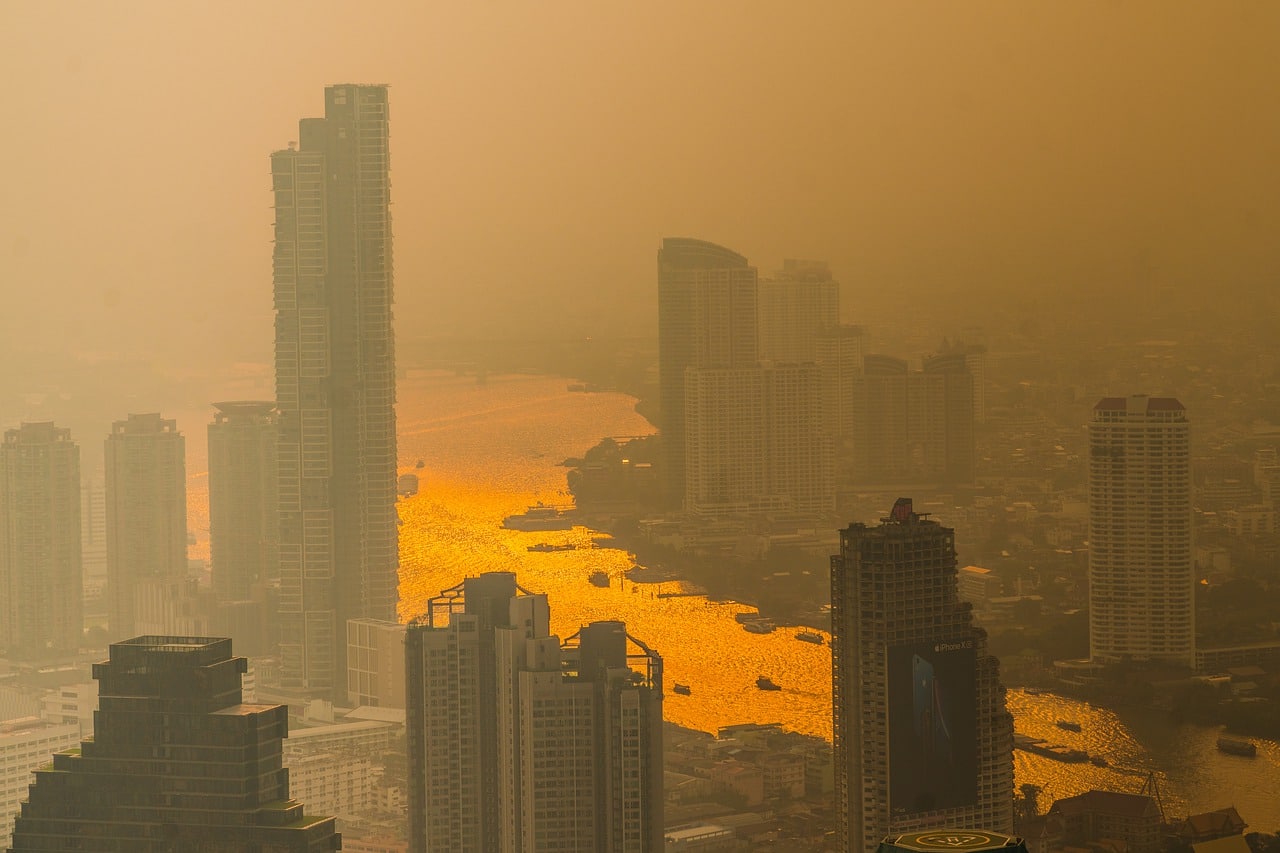
Air pollution levels in Bangkok worsened on Christmas Day, with fine particulate matter (PM2.5) readings climbing into the “orange” health alert range across several districts, raising concerns for residents and visitors during the holiday period.
Data released on December 25 showed PM2.5 concentrations exceeding Thailand’s recommended safety threshold in multiple parts of the capital, particularly in outer districts and areas close to major roads. The “orange” level indicates air quality that may begin to affect sensitive groups, including children, the elderly, and people with respiratory or heart conditions. Authorities urged residents to limit prolonged outdoor activities and to wear protective masks if necessary.
According to several news sources, the rise in pollution came despite a temporary dip in weekday traffic as many offices closed for the Christmas holiday. Environmental officials said seasonal factors, including weaker winds, temperature inversion, and ongoing emissions from vehicles and surrounding agricultural areas, contributed to the buildup of pollutants over the city.
The Bangkok Metropolitan Administration said it was closely monitoring air quality readings and coordinating with relevant agencies to manage emissions. Officials noted that while traffic volumes were slightly lower than usual, holiday travel and deliveries continued to add to vehicle exhaust, one of the main sources of PM2.5 in the capital. Construction activity in some zones also resumed after brief pauses earlier in the week.
Health authorities reiterated guidance for residents to check daily air quality updates and to take precautions when pollution levels rise. Schools and childcare centers were advised to adjust outdoor activities if PM2.5 readings remained elevated, while employers were encouraged to allow flexible arrangements where possible for workers with health vulnerabilities.
The pollution spike highlights Bangkok’s recurring struggle with air quality during the dry season, which typically runs from December to March. During this period, stagnant air and low rainfall allow pollutants to accumulate, often pushing PM2.5 levels above safe limits for days or even weeks at a time. Similar patterns have been observed in previous years around year-end and early January.
Environmental groups have long called for stronger, long-term measures to address the problem, including stricter vehicle emission standards, expanded public transport use, and tighter controls on industrial and agricultural burning. While authorities have introduced measures such as remote work advisories and vehicle restrictions during severe pollution episodes, critics say enforcement and coordination remain inconsistent.
Tourism operators said the air quality issue was being closely watched, particularly as Bangkok hosts a large number of domestic and international visitors during the holiday season. While no major disruptions were reported on Christmas Day, tour guides and hotel operators said they were advising guests to plan indoor activities and to monitor official health updates.
Forecasts suggested that air circulation could improve slightly in the coming days, depending on wind conditions, but officials cautioned that pollution levels could fluctuate quickly. Residents were urged to remain vigilant and to rely on official air quality platforms for real-time information.
As Bangkok heads into the peak of the dry season, the Christmas Day pollution readings serve as an early reminder that PM2.5 will likely remain a persistent public health challenge in the weeks ahead, even during periods traditionally associated with lighter traffic and holiday breaks.