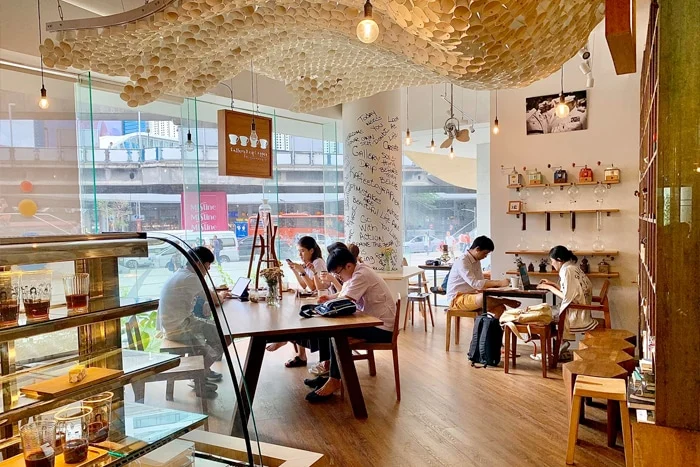
Thai social media users are increasingly questioning the use of minimum spend requirements at cafés and dessert shops, with online discussions gaining momentum this week as customers share personal experiences and complaints.
Posts circulating on Facebook, X, and TikTok describe situations where customers were told they needed to spend a fixed amount per person to stay seated, most often during busy periods. In some cases, customers said the minimum applied even when the menu items themselves were priced well below the threshold.
The issue has resonated with students, freelancers, and office workers who use cafés as short-term meeting spaces or places to work. Many online commenters argue that minimum spend rules run counter to the relaxed café culture that has become part of city life, particularly in Bangkok.
Business owners, however, say the rules reflect financial reality rather than greed. Several café operators cited in local reporting said customers often occupy tables for long stretches while ordering little, making it difficult to cover rent, utilities, and staffing costs. Minimum spends, they argue, help manage turnover during peak hours.
The debate highlights the strain facing small food and beverage businesses. Cafés operate on thin margins and face intense competition, while customers have become more price-conscious. At the same time, social media amplifies individual disputes quickly, forcing businesses to respond publicly even when policies are legal.
Consumer advocates note that minimum spend rules are not prohibited, but they stress that transparency is essential. Businesses are expected to clearly display any conditions before customers order. Disputes tend to arise when rules are communicated after customers are seated or enforced inconsistently.
The Office of the Consumer Protection Board has previously advised businesses to disclose pricing conditions clearly to avoid misleading consumers. While no new enforcement action has been announced, consumer groups say complaints typically rise during peak periods when cafés are crowded.
Some café owners appear to be adjusting in response to criticism. According to recent reports, certain shops now limit minimum spend rules to weekends or peak hours, while others are testing time-based seating limits instead.
The discussion also reflects how cafés are being used differently than in the past. Many now function as informal offices or study spaces, changing expectations on both sides. As those habits evolve, businesses and customers continue to renegotiate what feels reasonable.
For now, the issue remains largely a public conversation rather than a regulatory one. Whether minimum spend rules spread further or trigger stronger pushback may depend on how clearly policies are communicated and how sensitive customers remain to rising living costs.