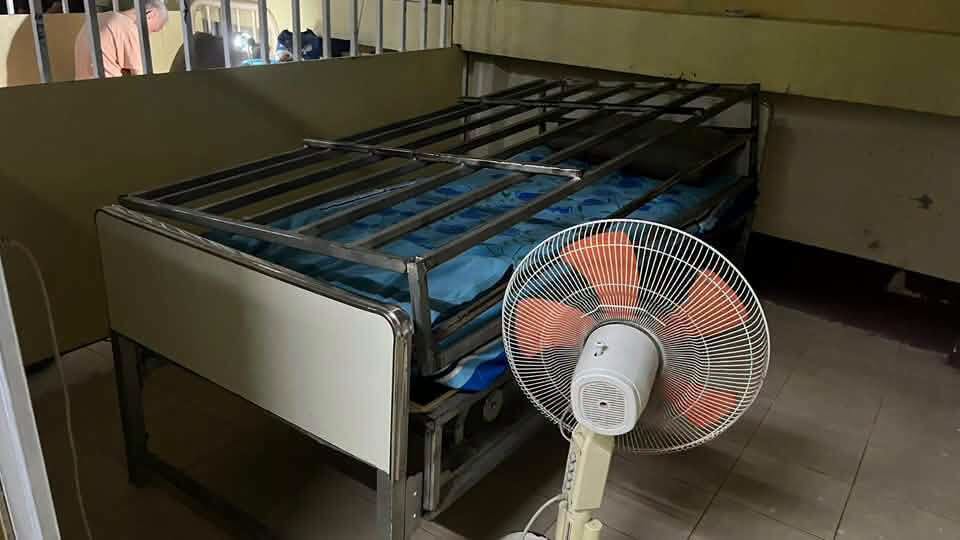









Thailand’s Ministry of Public Health has shut down a care home in Kanchanaburi province after inspectors found beds fitted with metal cages, more than twice the permitted number of beds, and dozens of psychiatric patients the facility had no authorization to treat. The ministry’s Department of Health Service Support revoked the license of Sothornchai Nursing Home in Tha Muang district on Wednesday, following complaints that residents were being held against their will, and ordered fresh checks on about 1,200 care centers across the country.
Officials said the move amounts to a closure order rather than a temporary suspension. It covers the business license and the operator’s license, both held by the same person.
Department inspectors who visited on Tuesday counted 129 beds at a home licensed for 50, according to several news sources. The premises had also grown well beyond the area approved in its license after an extension was built at the rear of the property.
Nearly 100 people were living there, and medical records identified most of them as psychiatric patients. The home was licensed only to care for older people and others who depend on help with daily living. Under Thai rules, psychiatric patients must be treated at a medical facility with doctors and specialist staff.
Public Health Minister Pattana Promphat told a media briefing on Wednesday that the owner, a former nurse, would face legal action. The ministry said the allegations of unlawful confinement are a separate criminal matter, and people who say they were harmed have already filed complaints with police.
The case came to light after a former resident, an elderly woman, told the Thai television news program Hone Krasae that she had been kept at the center against her will for more than two years. She said her son and daughter-in-law had placed her there.
Officers from the Central Investigation Bureau inspected the site on Monday. Images they released showed rooms fitted with iron bars and padlocked from the outside, barbed wire lining the perimeter, and metal cages bolted directly onto bed frames, with elderly residents lying inside. Investigators are gathering evidence and interviewing staff and residents to decide whether to pursue charges such as unlawful detention and mistreatment.
The operator has maintained that the caged beds were part of standard psychiatric care. Dr. Kittisak Aksornwong, director general of the Department of Mental Health, rejected that claim. He said patients who become severely agitated or aggressive may need a separate room designed to prevent injury. The ministry said structures resembling cages are not standard care for stable patients, older people or anyone who simply needs assistance, and it listed the caged beds among the violations found at the home.
Transfers will be decided only after specialists from the Department of Mental Health reassess and diagnose each resident, Pattana said, because many medical records lacked enough detail to judge people’s mental health. Relatives can take family members home or arrange a move to another center. For residents whose families haven’t decided yet, the ministry will arrange care at hospitals and facilities run by the Department of Mental Health.
The case has raised questions about oversight. The home began caring for older and dependent people in 2006 and received its license in 2021, the year rules bringing care homes under the Health Establishments Act 2016 took effect. Asked why the problems weren’t caught sooner, Dr. Phuwadet Surakot, the department’s director general, said the home’s latest license renewal was submitted online and followed the required procedures. Licensed facilities receive annual inspections at their premises, and the complaints led officials to visit before this year’s check was due.
The department has now instructed its 12 regional health service support centers, along with the division that oversees health establishments in Bangkok, to reassess standards at about 1,200 care facilities nationwide. The order applies to facilities registered with the department, and the checks are due to be completed within two months.
The revocation means the Tha Muang home can no longer operate, while the police investigation into the confinement complaints continues separately.