





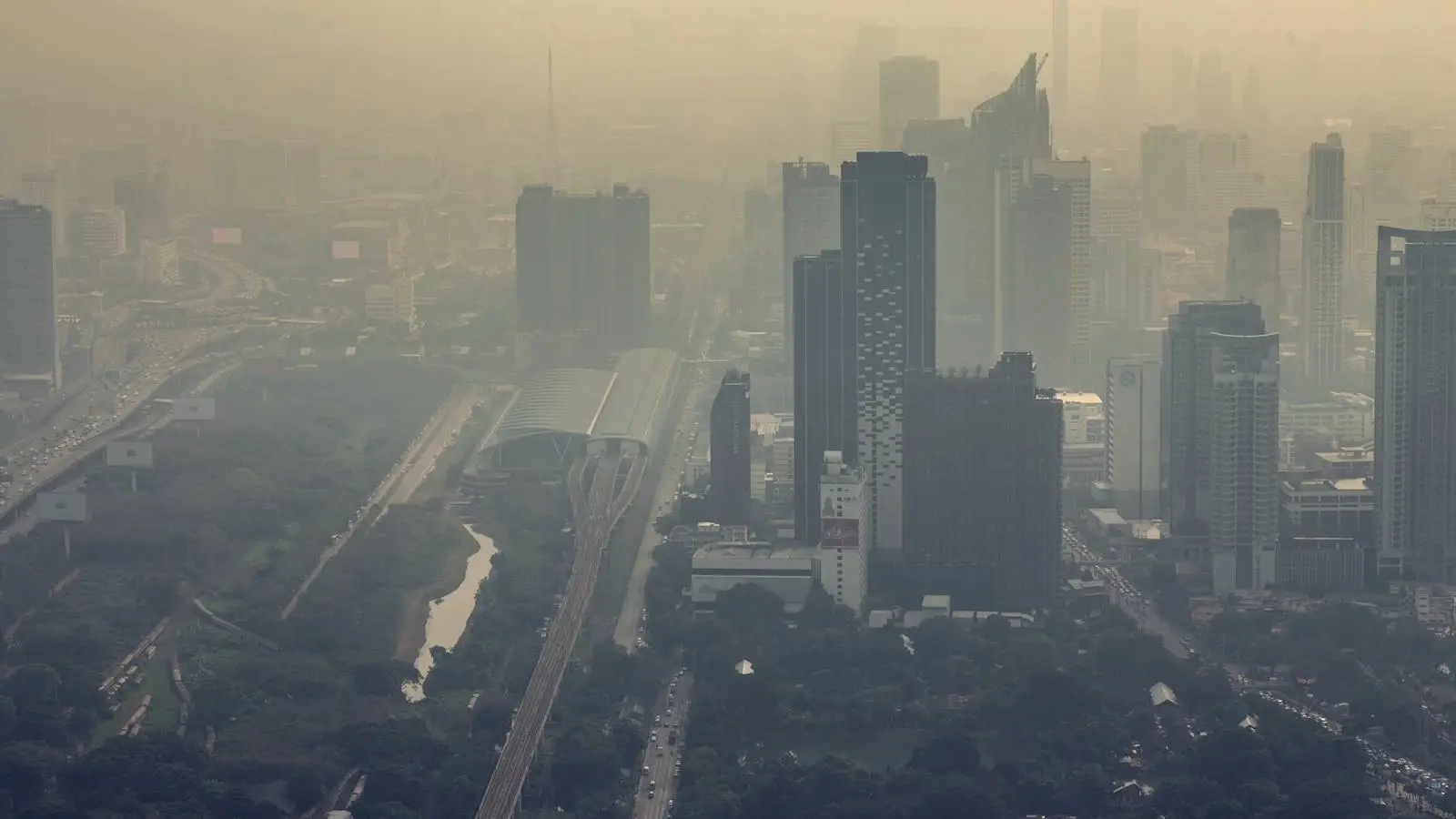
Thailand is again grappling with declining air quality as pollution levels rise across several parts of the country, reviving familiar concerns about public health and the effectiveness of long-standing mitigation efforts.
As the dry season settles in, fine particulate matter has increased in major urban areas and agricultural regions. The combination of vehicle emissions, industrial output, and seasonal burning has pushed pollution levels higher, particularly in Bangkok and northern provinces where weather conditions often trap contaminants close to the ground.
Health authorities have consistently warned that prolonged exposure to fine particulate matter poses serious risks, especially for children, older adults, and people with existing respiratory or heart conditions. Despite repeated alerts and public advisories, air pollution remains a persistent issue that resurfaces each year with limited long-term improvement.
Over time, authorities have rolled out a range of measures, including temporary traffic controls, restrictions on construction activity, bans on crop burning, and public guidance on reducing exposure. While these steps can reduce pollution temporarily, enforcement varies and outcomes often depend on weather patterns rather than sustained emissions reductions.
Traffic congestion continues to play a central role. Although investment in public transport and electric vehicles has increased, conventional engines still dominate the roads. Industrial activity around urban centers adds to the burden, particularly during periods of weak air circulation when pollutants accumulate more quickly.
In northern areas, agricultural burning remains one of the most sensitive challenges. Farmers often rely on burning crop residue as a low-cost method of land preparation. While monitoring has improved and penalties exist, informal practices and cross-border haze complicate enforcement, limiting the impact of domestic restrictions.
Public awareness has grown sharply in recent years. Real-time air quality data is widely accessed, and schools and workplaces are more likely to adjust schedules during severe pollution episodes. These measures help reduce immediate exposure but do not address the underlying sources driving seasonal pollution.
The economic implications are also becoming harder to ignore. Persistent air quality problems affect workforce productivity, strain healthcare systems, and raise concerns about urban livability. For a country that depends heavily on tourism and foreign investment, environmental conditions increasingly factor into broader perceptions of competitiveness.
Environmental advocates continue to call for clearer accountability, stronger coordination between agencies, and policies that focus on prevention rather than short-term responses. Without consistent enforcement and incentives for cleaner transport, industry, and agriculture, seasonal pollution is likely to remain a recurring problem.
As Thailand moves further into the dry season, air quality is expected to remain under pressure. Whether this year leads to meaningful progress or follows the familiar cycle of temporary relief will depend on how sustained policy efforts remain once public attention shifts elsewhere.
72
