The United States and Iran are closer to ending their war than at any point since fighting broke out in February, but for Thailand, one of Asia’s most exposed oil importers, the damage is already deep, and any real relief at the pump is still months away.
Iran’s foreign minister said Saturday that the two sides have never been closer to an understanding, according to several news sources. Pakistan’s prime minister, who has served as a key mediator, told reporters a final deal text had been reached and could be formalized within 24 hours. But Iran’s foreign ministry later clarified that a signing was not imminent, and conflicting reports continued to cloud the picture. As of Sunday morning, no agreement had been formally signed.
The war began on February 28, 2026, when the United States and Israel launched coordinated strikes on Iranian military infrastructure, killing Supreme Leader Ali Khamenei and triggering a chain of retaliatory escalations that ultimately shut down the Strait of Hormuz, the narrow waterway through which roughly 20% of the world’s crude oil and a fifth of its LNG supply normally flows. A temporary ceasefire brokered by Pakistan took effect in April, but it has been violated repeatedly by both sides, including fresh US strikes on Iranian targets on June 9 and 10.
Brent crude fell to around $87 per barrel on June 12, its lowest level since early March, as markets priced in the possibility of a deal. That marks a significant drop from the conflict-driven peak of $126 per barrel earlier this year, according to data from financial markets. The decline reflects genuine optimism, but energy analysts caution that even a formal agreement would not quickly translate into lower bills for Thai consumers. Clearing mines from the Strait of Hormuz, restarting idled oil fields, and repairing energy infrastructure damaged by months of drone and missile attacks will each take considerable time. Historically, oil price risk premiums of this kind take three to six months to dissipate after a formal resolution, and only fully normalize once global inventories recover, a process that could stretch well into 2027.
Thailand’s exposure to this crisis has been severe and well-documented. The country relies on the Middle East for roughly 52% of its energy imports, and gas alone accounts for 66% of its electricity generation, according to the Institute for Energy Economics and Financial Analysis. When the Strait of Hormuz closed in late February, around 28% of Thailand’s LNG cargo deliveries were cut off almost immediately. Replacement cargoes, sourced from alternative markets, cost upwards of $23.50 per million British thermal units; more than double the $11 per MMBtu Thailand was paying before the conflict. When combined with the 5.3% depreciation of the Thai baht during the worst months of the crisis, the actual cost of a replacement LNG cargo rose by an estimated 125% in local currency terms.
The consequences spread well beyond energy bills. Thailand’s National Economic and Social Development Council lowered its 2026 GDP growth forecast to 1.4%, down from a pre-conflict estimate of 2.0%. The Bank of Thailand revised its own projection to 1.5%, in line with a separate cut by the International Monetary Fund. The Federation of Thai Industries warned that a prolonged conflict could push growth as low as 1.3%. Tourism has also taken a hit, with Krungsri Research cutting its 2026 foreign visitor forecast to 32.5 million from 35.5 million, as flight disruptions, higher airfares, and travel safety concerns dampened arrivals from Western markets. Business confidence fell to a seven-month low in March, with Thailand’s hotel, restaurant, and plastics manufacturing sectors among the hardest hit.
The government has leaned on the Oil Fuel Fund to cushion domestic prices, a tool it has used before, most recently drawing the fund down by around 200 billion baht during the Russia-Ukraine energy shock. Analysts have warned that fiscal space is tighter this time, with public debt having risen to around 66% of GDP. Thailand currently holds roughly 60 days of fuel reserves, which authorities have described as sufficient to maintain supply stability without the need for emergency rationing.
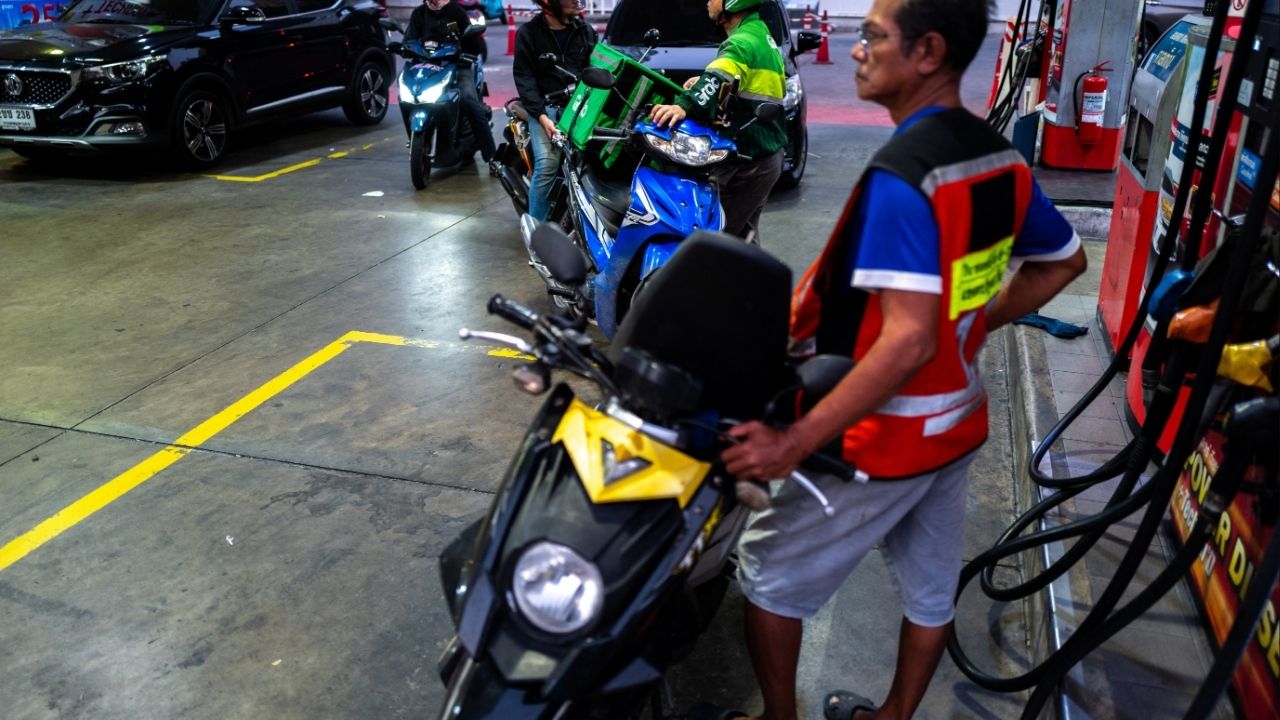
At the pump, Bangkokians are paying around 43.10 baht per litre for Gasohol 95 and 40.80 baht per litre for standard diesel as of mid-June, elevated compared to pre-crisis norms but below the peak levels seen earlier this year when the crisis was at its worst.
A final deal, if it holds, would reopen the Strait and gradually bring global oil supply back to normal levels. For Thailand, every $10 drop per barrel in crude prices is estimated to add roughly 0.3 to 0.4 percentage points back to GDP growth, according to Krungsri Research. That means a sustained return to pre-conflict price levels could be worth more than a full percentage point of growth to an economy that badly needs it.
But the word if is doing a lot of work. Iran’s mixed signals, the unresolved gap between US and Iranian negotiating positions, and the physical challenge of reopening a militarized waterway all mean the situation remains fragile. For the millions of Thai households and businesses that have absorbed four months of elevated energy costs, the prospect of relief is real; it just isn’t here yet.