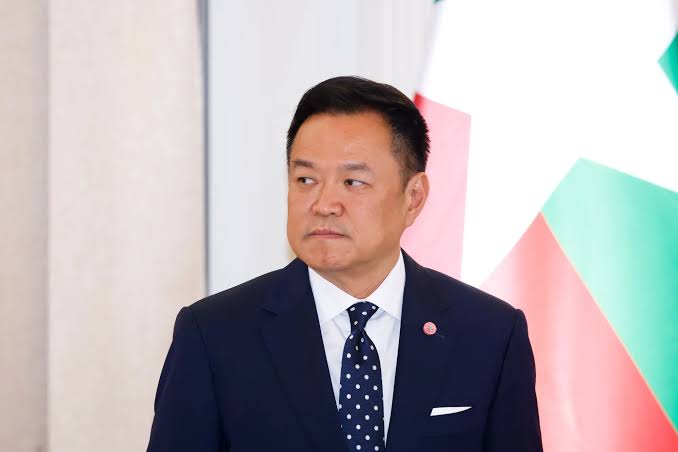








Prime Minister Anutin Charnvirakul and US President Donald Trump are scheduled to sign a joint statement in Manila today confirming that Thailand and the United States have reached broad agreement on a reciprocal trade deal, according to several news sources. The signing, set for 6:30 p.m. Thailand time during the ASEAN-US Special Summit, caps months of tariff talks. But it isn’t the final agreement, and it won’t name a tariff rate.
Deputy Prime Minister and Commerce Minister Suphajee Suthumpun said the leaders’ meeting and signing would take place at 7:30 p.m. Philippine time. The full Agreement on Reciprocal Trade, known as ART, will not be signed in Manila.
The joint statement is a political declaration rather than a treaty. Thailand’s Cabinet approved the draft on November 10 and authorized Anutin to announce or sign it with Trump. The document confirms that the two sides have reached a substantial conclusion in their negotiations, but it doesn’t disclose the agreed terms or set a tariff rate. The Commerce Ministry said the statement is meant to show both leaders’ political commitment to closer trade and investment ties and to give businesses and investors in both countries more confidence.
Deputy Prime Minister and Foreign Minister Sihasak Phuangketkeow first said on November 11 that the talks had been settled in principle. He noted that many details still needed work and that the deal would have to go before Parliament. Over the weekend, he said again that the statement would confirm agreement on the broad terms.
Sihasak also played down concerns that Trump might use his Manila visit to press Thailand for more concessions. He said both sides were satisfied with where the talks stood. Most of the negotiation, he said, centered on market access, including Thai purchases of more American goods, Thai investment in the US and the opening of service sectors. He added that Thailand had to accept that the US is a huge market where it runs a large trade surplus, and that the goal was to keep access to that market while pushing tariffs as low as possible.
For Thai exporters, the key question is what rate their goods will eventually face. Under a framework the two countries announced in October 2025, Thailand agreed to remove tariffs on about 99 percent of US goods. Washington set a 19 percent reciprocal tariff on Thai imports and said some products could qualify for a zero rate.
That arrangement was overtaken by events in Washington. In February, the US Supreme Court ruled against the reciprocal tariffs imposed under the International Emergency Economic Powers Act, and the 19 percent rate stopped applying. A temporary 10 percent tariff followed. Since July 24, most Thai goods entering the US have paid an additional 12.5 percent tariff under Section 301 of the US Trade Act. Washington imposed it after finding that Thailand had not put in place and effectively enforced a ban on imports made with forced labor. About 2,120 Thai product lines are exempt.
Anutin said on November 5 that he expected the US tariff rate under the new agreement to be around 19 percent. He also said existing tariff arrangements would stay in place until the main agreement is signed.
Thailand also faces a separate Section 301 investigation, launched in March, into alleged excess manufacturing capacity in industries including automotive parts, machinery and rubber products. The Commerce Ministry said it hopes today’s announcement will improve Thailand’s chances of favorable treatment on future US tariff measures, including those tied to excess capacity. That is Bangkok’s expectation, not a commitment from Washington.
Several steps remain before any deal takes effect. Both countries must complete their own domestic legal procedures. In Thailand, legal teams must first agree on the substance and wording of the draft before it goes to the Cabinet for approval. The process also includes parliamentary consideration and public consultation, and officials have said the agreement’s contents will be disclosed during those stages.
The Manila meeting falls in a busy week of diplomacy for Anutin. He is attending the 49th ASEAN Summit and will then travel to China for the Asia-Pacific Economic Cooperation meetings. He hosted Chinese Premier Li Qiang for an official visit to Bangkok from November 13 to 15.
Todat’s signing gives Thai businesses a clearer signal that a deal with Washington is close, and it puts both leaders on record behind it. Still, the details that matter most to exporters, including the final tariff rate and which products qualify for relief, won’t be public until the full agreement clears legal review, the Cabinet and Parliament. Until then, Thai goods will keep facing the current US tariffs. The real test of the deal will come when its terms are finally made public.